Sequencing an ancient creature’s RNA opens up a new window into extinct life.
The Yuka mammoth on display in a frozen collection
Credit:
Valeri Plotnikov
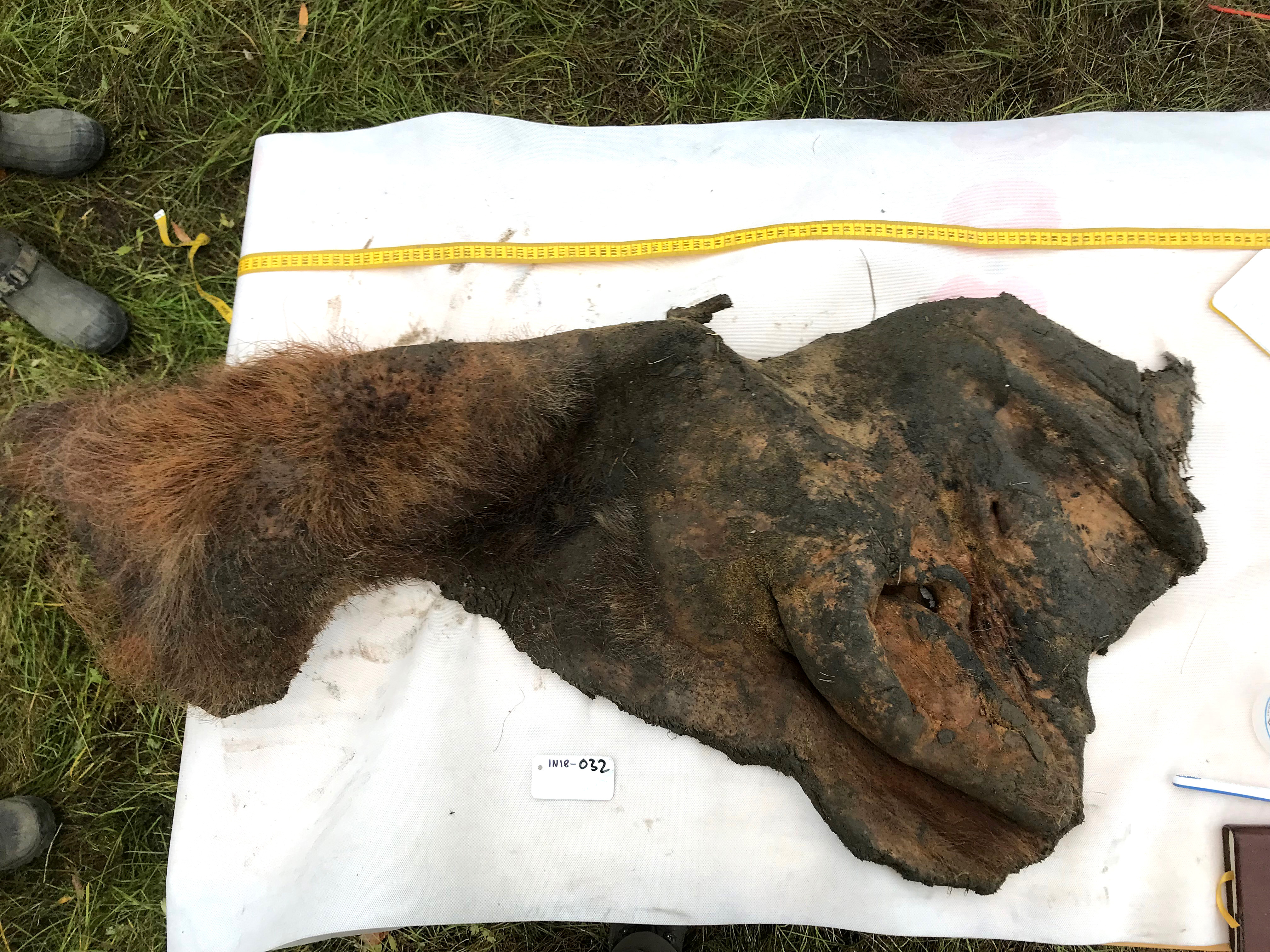
A young woolly mammoth now known as Yuka was frozen in the Siberian permafrost for about 40,000 years before it was discovered by local tusk hunters in 2010. The hunters soon handed it over to scientists, who were excited to see its exquisite level of preservation, with skin, muscle tissue, and even reddish hair intact. Later research showed that, while full cloning was impossible, Yuka’s DNA was in such good condition that some cell nuclei could even begin limited activity when placed inside mouse eggs.
Now, a team has successfully sequenced Yuka’s RNA—a feat many researchers once thought impossible. Researchers at Stockholm University carefully ground up bits of muscle and other tissue from Yuka and nine other woolly mammoths, then used special chemical treatments to pull out any remaining RNA fragments, which are normally thought to be much too fragile to survive even a few hours after an organism has died. Scientists go to great lengths to extract RNA even from fresh samples, and most previous attempts with very old specimens have either failed or been contaminated.
A different view
The team used RNA-handling methods adapted for ancient, fragmented molecules. Their scientific séance allowed them to explore information that had never been accessible before, including which genes were active when Yuka died. In the creature’s final panicked moments, its muscles were tensing and its cells were signaling distress—perhaps unsurprising since Yuka is thought to have died as a result of a cave lion attack.
It’s an exquisite level of detail, and one that scientists can’t get from just analyzing DNA. “With RNA, you can access the actual biology of the cell or tissue happening in real time within the last moments of life of the organism,” said Emilio Mármol, a researcher who led the study. “In simple terms, studying DNA alone can give you lots of information about the whole evolutionary history and ancestry of the organism under study. “Obtaining this fragile and mostly forgotten layer of the cell biology in old tissues/specimens, you can get for the first time a full picture of the whole pipeline of life (from DNA to proteins, with RNA as an intermediate messenger).”
Combining DNA and RNA analysis led the researchers to discover that, while Yuka is usually described as a juvenile female based on inspection of the external anatomy, it’s actually a male. Both of these molecules contained sequences derived from the Y chromosome, which only males have.
“Whether this means that the initial anatomical exam was wrong, or that maybe Yuka is indeed an XY male genetically, but due to some developmental issue—its genitals stayed in a feminized form—we cannot actually say,” Mármol said. “We did not find any evidence with our data supporting the impaired genital development, so the answer to this remains unclear and merits further investigation.”
Studying a fragile molecule
While scientists have studied DNA from creatures that lived up to 2 million years ago, RNA sequencing has lagged far behind with sparse success that previously extended only as far back as a 14,000-year-old specimen. That’s mainly because RNA normally breaks down very quickly. DNA is a stable repository of information; it’s less chemically reactive, and there are a lot of enzymes dedicated to preserving it. RNA, in contrast, is constantly produced and destroyed once it’s served its purpose, lasting only a few hours in living cells.
So when a cell dies, RNA usually degrades rapidly. But the process requires liquid water; if it’s frozen, as in many Ice Age remains, the process halts.
Coauthor Valeri Plotnikov examining a mammoth leg with soft tissue emerging from the permafrost in Belaya Gora, Siberia.
Credit:
Love Dalén
Now that scientists have demonstrated that it’s possible to recover such old RNA, the same technique could be applied to samples from other long-extinct species. We could potentially detect if the creatures were infected with RNA-based viruses like influenza or coronavirus when they died.
“Knowing that RNA is preserved means that we have another tool to use to reconstruct and validate ancient genomes,” said Beth Shapiro, an evolutionary biologist who was not involved in the study. “In the future, we should be able to use this approach to explore how gene expression differs between extinct and living species or even between individuals of the same extinct species. I look forward to the next series of papers as this approach is applied more broadly.”
Mármol says he hopes to see more work done on Tasmanian tigers and woolly mammoths, “but other extinct species do come to my mind, such as the dodo, the moa, cave lions, cave bears, dire wolves, the great auk.” The best candidates are those that lived in cold, dry environments, since tropical conditions are unlikely to preserve RNA.
The method could also be applied to remains of the ancestors of still-living species as well. For example, Mármol says, “There is probably a great room to explore the biology and evolution of currently endangered species back when they were more numerous, and obtain a more comprehensive and functional understanding of the effect of population decline by including the RNA layer to paleogenetic studies.” Studying ancient RNA in combination with DNA and protein opens a new window into lost worlds, while also providing clues that could help pull today’s threatened species back from the brink of extinction.
Cell, 2025. DOI: 10.1016/j.cell.2025.10.025
Ashley Balzer-Vigil writes about space for a contractor for NASA’s Goddard Space Flight Center and freelances as an environmental writer. She holds master’s degrees in space studies from the University of North Dakota and science writing from Johns Hopkins University. She writes most of her articles with one of her toddlers on her lap.