


Felicity Bradstock
Felicity Bradstock is a freelance writer specialising in Energy and Finance. She has a Master’s in International Development from the University of Birmingham, UK.
Set us as your preferred Google source
Premium Content
By Felicity Bradstock – Dec 13, 2025, 10:00 AM CST
- The U.K. is advancing large-scale projects at Hinkley Point C and Sizewell C while selecting Rolls-Royce to deliver the first domestic SMRs.
- A sweeping regulatory overhaul and new planning rules aim to cut costs, accelerate siting, and improve investor confidence as the government targets 25 percent nuclear power by 2050.
- New partnerships with the United States and a forthcoming strategic plan position Britain to reenter the top tier of global nuclear developers.
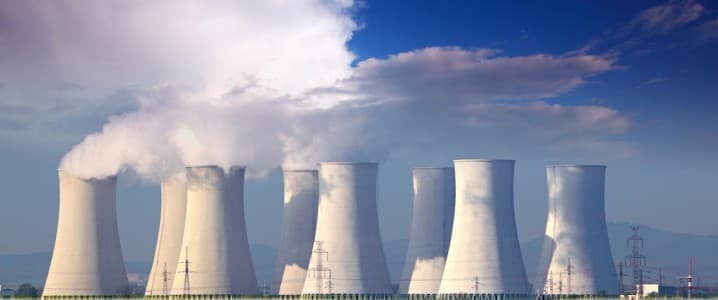
The United Kingdom has big plans for its nuclear sector, with the construction of two conventional nuclear plants underway and plans to develop small modular reactor (SMR) technology. France’s EDF Energy is managing the development of the Hinkley Point C power plant in Somerset and Sizewell C in Suffolk, while Rolls-Royce was recently selected as the preferred bidder to construct the U.K.’s first SMRs. However, the plans do not stop there.
In December, the country’s Energy Secretary Ed Miliband stated the government has “only just begun when it comes to our ambitions for new nuclear in the U.K,” at the Nuclear Industry Association’s Nuclear 2025 conference in London.“The work we are doing to drive forward Hinkley Point C, Sizewell C and our SMR programme will together bring more nuclear capacity onto the grid than in the last half century combined,” said Miliband. “When you think about the demands of electricity, there is so much more this industry can do.”
Miliband said the government will deliver on promises to develop SMRs and advanced modular reactors (AMRs) and will soon publish a framework on privately funded advanced nuclear projects. Great British Energy – Nuclear (GBE-N) will be in charge of assessing proposals. The government is also reforming planning rules to expand the areas in which new nuclear projects can be developed beyond the eight existing sites, which will expand the reach of SMRs and AMRs. GBE-N will conduct research between now and autumn 2026 to identify a suitable site for another large-scale nuclear plant to be developed, according to Miliband.
At the conference, GBE-N’s Chair, Simon Bowen, stated that developing more large-scale nuclear capacity is “a critical part of the mix. And the identification of which sites could be used is a really important piece of work.” Bowen added, “Of course, we’ve got an established technology at Hinkley and Sizewell, and that must be a very credible frontrunner or a credible technology for us to continue to develop, but we have to market-test that to see whether or not there are better value-for-money options for the taxpayer, and that is a natural thing for us to do.”
Miliband emphasised that the GBE-N assessment will align with the Strategic Spatial Energy Plan, which will also be published next year to inform the U.K.’s future nuclear building programme to 2030 and beyond.
The Nuclear Regulatory Taskforce recently published recommendations on the U.K.’s nuclear power development. The Taskforce called for urgent reforms, saying there were “systemic failures” in the U.K.’s nuclear framework. It said that fragmented regulation, flawed legislation, and weak incentives had led the country to fall behind as a nuclear powerhouse. The government is expected to produce a full implementation plan within three months, to be supported by new, streamlined regulations.
Developing a new nuclear fleet is no easy feat. Despite being the birthplace of commercial nuclear power, the U.K. now produces just 15 percent of its electricity from about 6.5 GW of nuclear capacity at present, compared to neighbouring France, which produces around 65 percent of its electricity from nuclear power. However, the government now aims for nuclear energy to contribute a quarter of the U.K.’s power by 2050.
Despite the significant progress in the development of the U.K.’s nuclear energy industry, several challenges stand in the way of the country’s nuclear renaissance. The Nuclear Regulatory Taskforce found that the U.K. had become the “most expensive place in the world” to construct nuclear power plants, citing “overly complex” bureaucracy as a major hurdle. It suggested that an overhaul of the country’s nuclear regulations could save it “tens of billions” in costs.
The U.K. is looking outwards to improve its chances for an accelerated deployment of nuclear power. In September, the U.K. and the United States signed an agreement to develop their nuclear power capabilities in the areas of advanced nuclear reactors, advanced nuclear fuels, and fusion energy, to ensure that the two countries remain at the forefront of fission and fusion innovation, according to the White House.
As part of the deal, the U.K. government increased access to the market for both U.K. and U.S. companies, which led to the announcement of several commercial deals. Prime Minister Kier Starmer said,” These major commitments set us well on course to a golden age of nuclear that will drive down household bills in the long run, while delivering thousands of good jobs in the short term.”
The U.K. is well on its way to reestablishing itself as a major global nuclear energy power, following years of underinvestment in the sector. New large- and small-scale projects will be supported by favourable policies, streamlined regulations, and greater public funding, which are expected to drive private investment in the sector. Meanwhile, agreements with foreign nuclear powers could help the U.K. advance the development of innovative new technologies.
By Felicity Bradstock for Oilprice.com
More Top Reads From Oilprice.com
- Russia-China Gas Pipeline Could Take 10 Years to Build
- Oil Tanker Rates Skyrocket 467%
- Shadow Fleet on Edge After U.S. Seizes Tanker in Venezuelan Waters
Download The Free Oilprice App Today


Felicity Bradstock
Felicity Bradstock is a freelance writer specialising in Energy and Finance. She has a Master’s in International Development from the University of Birmingham, UK.


