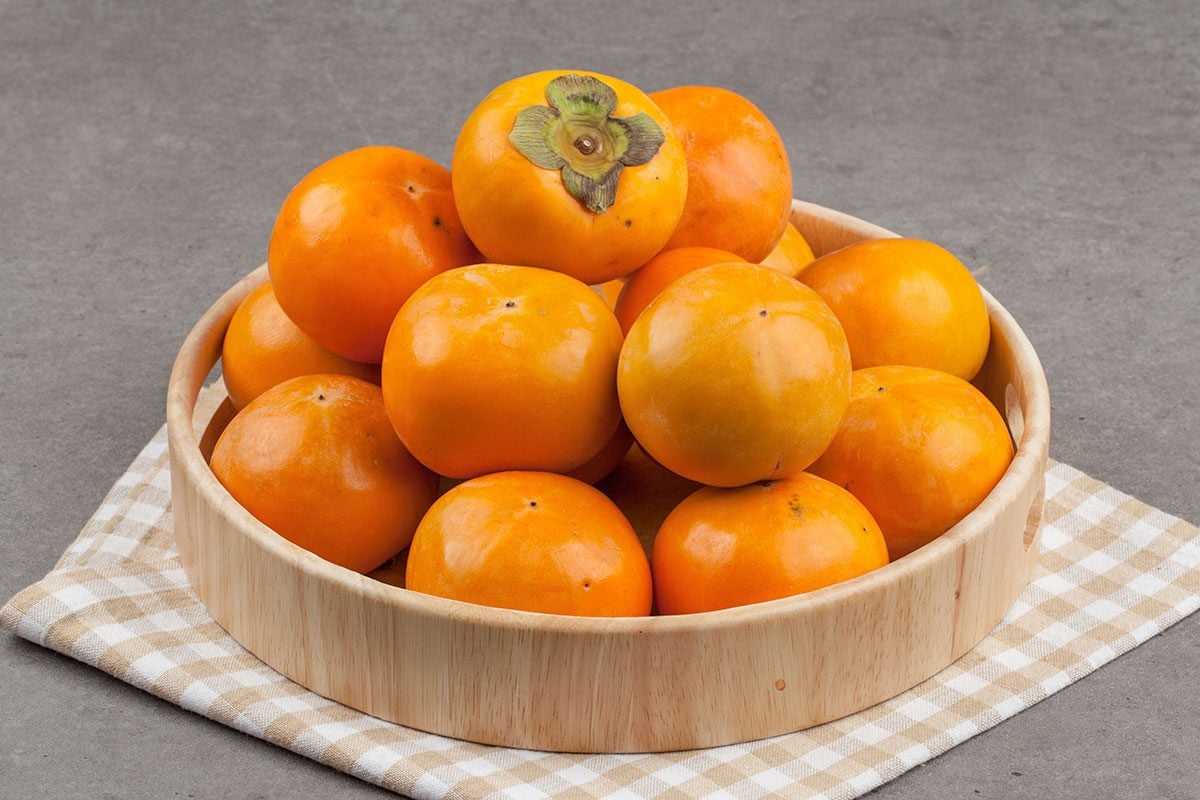


If you’ve ever passed persimmons in the produce aisle and felt unsure of what to do with them, you’re not alone. Here’s a no-stress guide to the two main types, how to eat them and how to store them.
I was 16 the first time persimmons entered my life, and they did so with a ridiculous misunderstanding. My best friend and I were driving through a quiet neighborhood when a handwritten yard sign made us slam on the brakes: “Persimmons—50¢.” I gasped, and we made a far-too-excited U-turn. You see, at the time, we thought that a persimmon was a kind of dog.
We raced to the front door and knocked with wild enthusiasm. An elderly woman answered, and we bounced on her doorstep, begging to see the adorable persimmons. She returned, confused, carrying a box of bright orange fruit. Not, heartbreakingly, a crate full of puppies. There was a long silence followed by a slow comprehension. Then, because we were polite (albeit dim) teenagers, we bought a box of persimmons that we neither wanted nor understood. We drove away howling with laughter—humiliated, enlightened and with a shoebox full of persimmons balanced in my lap.
Since that afternoon, persimmons have evolved from a source of shame to one of my favorite cool-weather ingredients—though it’s true that I can’t help but smirk every time I eat one.
What are persimmons?

Persimmons are glossy, orange fruits that slightly resemble tomatoes. They arrive each year with the cooler weather, marking the shift into fall and winter cooking. When they’re ripe, persimmons taste softly floral and honeyed, with gentle notes of apricot and warm spice. Nutritionally, they’re rich in fiber, vitamin A, vitamin C and antioxidants.
And yet, despite all of that, persimmons remain strangely misunderstood. They sit patiently in grocery store displays, beautiful and unfamiliar, waiting for someone to take the leap. But, as with many things, the only real barrier is uncertainty. Which variety should you grab? What do you actually do with it once you get home? With a little guidance, persimmons become far less mysterious and a lot more inviting.
Types of Persimmons
Most grocery stores carry two varieties: Fuyu and Hachiya. They look similar at first glance, but they behave very differently in the kitchen—and knowing which one you have makes an enormous difference. One can be eaten while still firm, sliced and snacked on with ease. The other must be fully softened before it’s even remotely pleasant to work with.
Fuyu persimmons
Fuyu persimmons are wide and round, shaped like slightly flattened tomatoes. They stay firm even when ripe and can be eaten while still crisp. Their flavor is mild, clean and gently sweet. That gentle sweetness makes them especially versatile, working just as easily in savory dishes as in desserts. They add a pop of color and a subtle fruitiness without overpowering the flavors of whatever you pair them with.
These are the persimmons you can slice and eat out of hand, layer into salads, tuck onto a cheese board or even roast alongside vegetables. If you’re new to persimmons, Fuyus are the least intimidating place to start.
Hachiya persimmons
This is the variety that requires a bit more patience. Hachiya persimmons are taller, acorn-shaped and known to be somewhat finicky. When Hachiyas are underripe, they’re aggressively, unpleasantly astringent. When they are ripe, however, they become deeply soft and custardy with concentrated sweetness.
Once fully ripened, Hachiyas are ideal for baking and blending, making wonderful breads, puddings and cookies. Their texture at this stage is silky, spoonable and especially well-suited for traditional persimmon pudding and other classic baked desserts. This is the variety most people are referring to when they talk about persimmon puree.
How to Eat Persimmons

How you should eat a persimmon depends entirely on which type you’re holding. The difference between the two isn’t subtle, and eating the wrong variety at the wrong stage or ripeness is often what gives persimmons their unfair reputation.
Fuyus can be eaten just as simply as apples—washed, sliced and enjoyed fresh. They’re wonderful raw and hold their shape well in salads and savory dishes. Hachiyas, on the other hand, should only be eaten once they’re so soft they feel like a water balloon in your palm. When they’re fully ripe, they can be scooped or blended into a puree for baking.
How to Use Persimmons
Persimmons feel especially at home in fall and winter baking, where their natural sweetness pairs beautifully with flavors like cinnamon, nutmeg, ginger and vanilla. They also add brightness to salads, especially alongside citrus, nuts and sharp cheeses. This time of year, you’ll see persimmons featured in breads, cookies, chutneys, jams and holiday desserts. They’re surprisingly versatile once you know how to work with them.
Taste of Home readers love persimmons in recipes like:
- Indiana Persimmon Pudding: A classic Midwestern dessert made with ripe Hachiya persimmon puree and warm spices.
- Spiced Persimmon Ice Cream: A creamy, wintery scoop where persimmon’s mellow sweetness meets cinnamon and spice.
- Pomegranate Persimmon Salad: A bright, fresh salad that highlights the crisp texture of sliced Fuyus.
- Cranberry Persimmon Cookies: Tart cranberries and sweet persimmons baked into beautifully moist, holiday-ready cookies.
- Persimmon Squash Pie: A traditional squash pie with persimmon lending extra depth and sweetness.
How to Store Persimmons
Storing persimmons isn’t complicated, but proper storage depends on the variety. Their ripeness at the time of purchase also plays a role, especially for Hachiyas, which often need time on the counter before they’re ready for the refrigerator. Treating each type according to its needs helps preserve both flavor and texture.
Fuyus can sit at room temperature for a few days and then move to the refrigerator once they’ve ripened, where they’ll keep for a couple of weeks. Hachiya persimmons should be allowed to ripen at room temperature until they are completely soft. Once they reach the custardy stage, they should be refrigerated and used within a week. If you’re working with persimmon puree, store it in an airtight container in the fridge for up to three days, or freeze it for up to six months.
Related:
- What Are Fava Beans?
- What Are Pepitas and What Can You Do with Them?
- What Is Hojicha, and How Does It Compare to Matcha?