
Image: Vladimir Sukhachev / Shutterstock.com
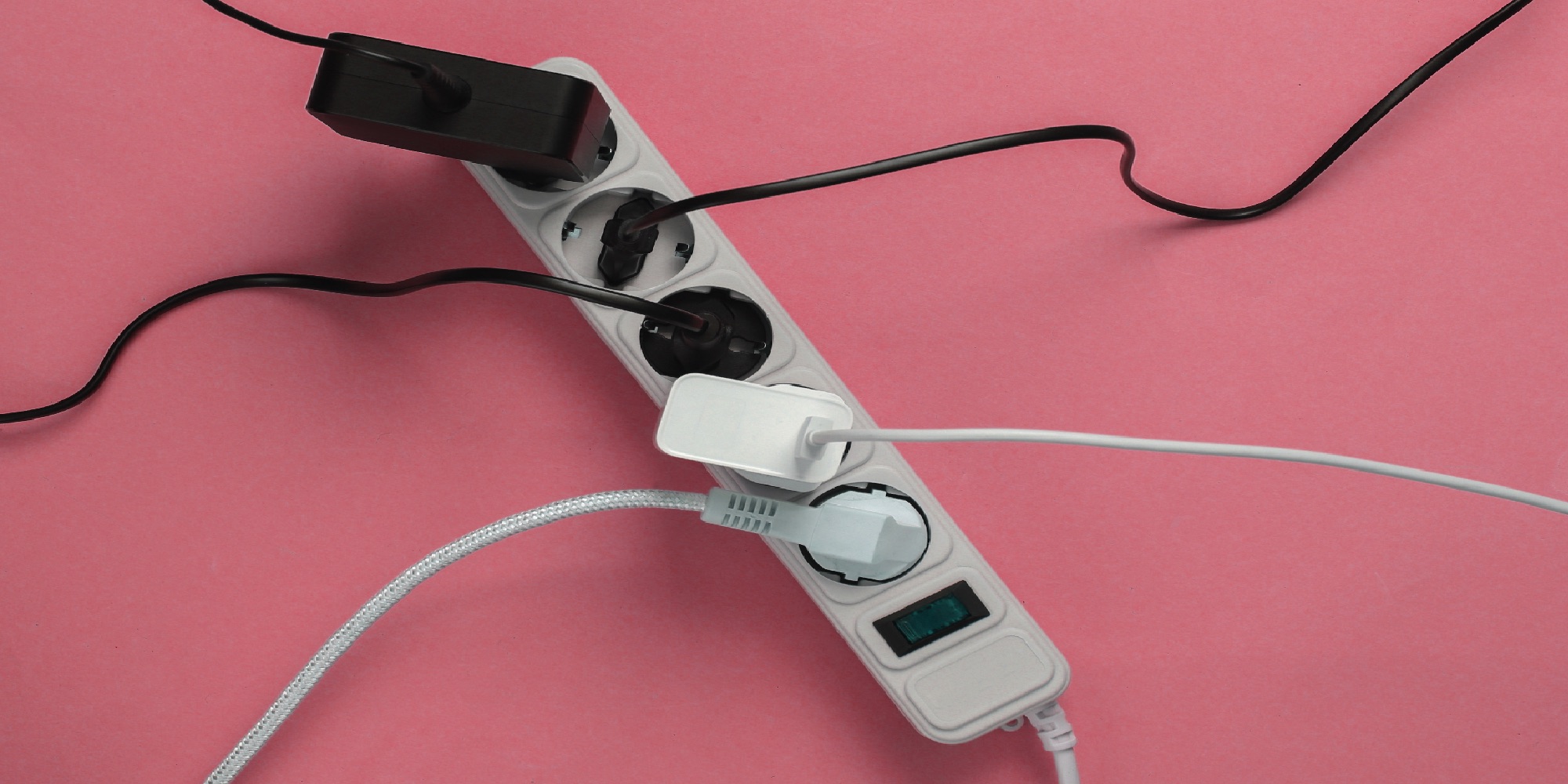
Natural law number 4,568 states: There are never enough power outlets in the house. That’s why most of us rely on good old power strips. Unfortunately, this solution also has its pitfalls, because not all devices are suitable for power strips.
Read on to find out which devices these are and what can happen in the worst case scenario:
Electric cookers
Electric cookers should never be plugged into a multiple socket. Such appliances are designed for high power consumption and are connected to a high-voltage power supply.
The maximum load capacity of standard multiple sockets is usually between 3,000 and 3,500 watts. Cookers significantly exceed this value, especially when the hob and oven are in use at the same time. This would result in the cables heating up significantly, which could damage the insulation – in extreme cases, there is a risk of a cable fire.
Other power strips
Forget about system hacks: so-called “daisy chaining” – i.e. connecting several power strips in series – significantly increases the risk of overload. Use an extension cable instead.
Drills, saws, and other power tools generate high current peaks when started. The same applies to hairdryers, straighteners and curling irons, which have high heating resistances.
It is always better to connect such appliances directly to a wall socket, especially in damp rooms such as bathrooms, where multiple sockets are generally problematic.
Kitchen appliances
Many kitchen appliances also appear harmless, but are not when it comes to electricity. Toasters, kettles, air fryers, microwaves and sandwich makers often have a power output of 1,500 to 3,000 watts.
A single appliance may not overload a multiple socket under certain circumstances. However, it becomes critical when several kitchen appliances are operated simultaneously via a power strip.
Power guzzlers
Appliances such as tumble dryers, older refrigerators and air conditioners are among the biggest power consumers in the household. They either require high electrical power over a long period of time or generate particularly high power peaks when switched on.
Tumble dryers work with powerful heating elements that continuously draw a lot of energy. Refrigerators and air conditioners, on the other hand, operate in cycles and switch their compressors on and off regularly. This results in so-called inrush currents that exceed normal operating consumption. These short-term load peaks can place a heavy strain on multiple sockets.
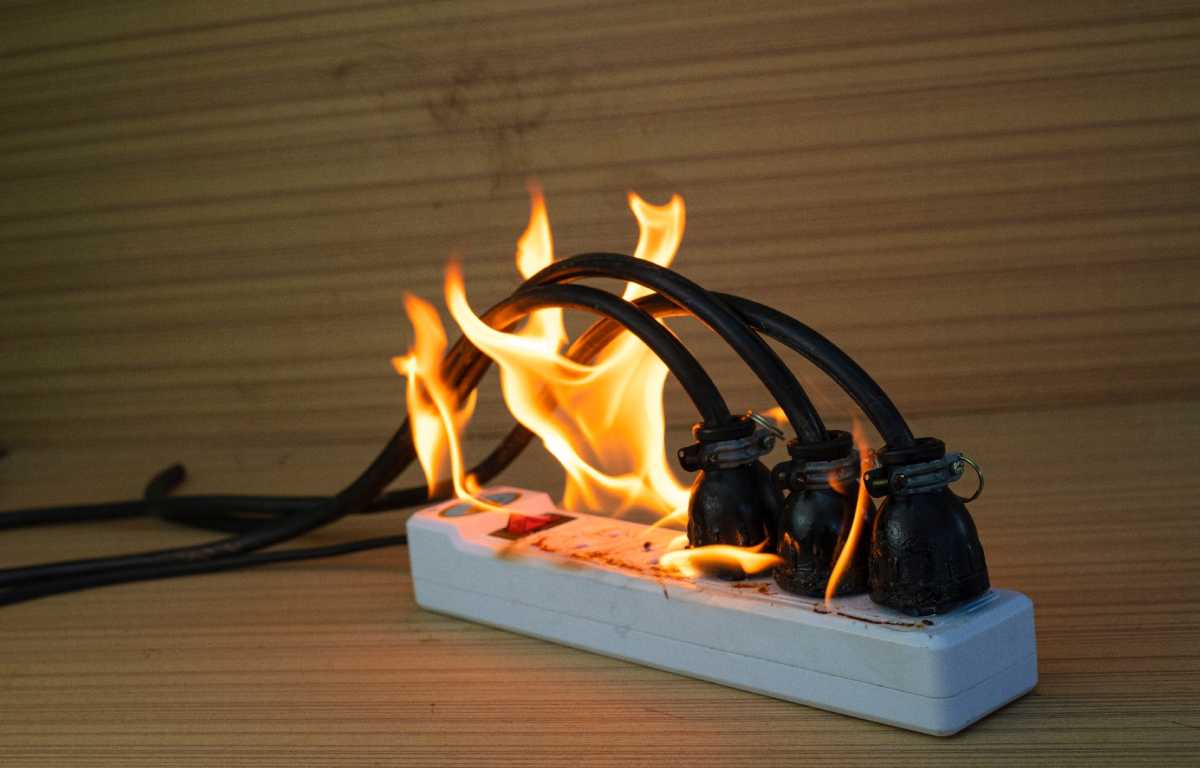
If you exceed the maximum power rating of a power strip, there is a risk of fire.
Thichaa
General tips for multiple sockets
- The maximum power rating of a multiple socket can be found either near the switch or on the underside of the power strip.
- If this power is exceeded, there is a risk of the cables overheating and even catching fire. Therefore, pay attention to how many watts the connected devices require when switched on.
- Only buy high-quality multiple sockets with the seals from trusted third parties such as UL Solutions, CSA, etc.
- Avoid using multiple sockets in damp rooms such as bathrooms or in the sink area of the kitchen.
- Ensure that multiple sockets have sufficient air circulation and are not covered or squeezed between the wall and furniture (this promotes overheating).
- Never place multiple sockets next to flammable objects such as cardboard boxes or curtains.
This article originally appeared on our sister publication PC-WELT and was translated and localized from German.
Author: Florian Kastner, Contributor, PCWorld
Florian Kastner has been working as a freelance author in the areas of IT and marketing since 2016. He holds a computer science degree and has plenty of practical experience, specializing in the topics of AI, Android and VPN. Previously a ghostwriter, he has written for everything from computer magazines to renowned companies such as Hubspot. His passion: explaining complex issues in an understandable way, and converting them into easy-to-follow tutorials.