

Digital Trends may earn a commission when you buy through links on our site. Why trust us?
3d printers for people who just want to hit print

Bambu Lab
You no longer need an engineering degree to print a Baby Yoda. A few years ago, 3D printing was a hobby defined by troubleshooting: leveling beds with sheets of paper, unclogging nozzles, and tightening belts. In 2026, the technology has finally matured into an “appliance” phase.
Modern beginner printers now calibrate themselves. They use sensors to map the print bed, adjust the nozzle height automatically, and even compensate for vibration to ensure smooth walls. If you are looking to get into the hobby, do not accept a machine that requires manual tinkering.
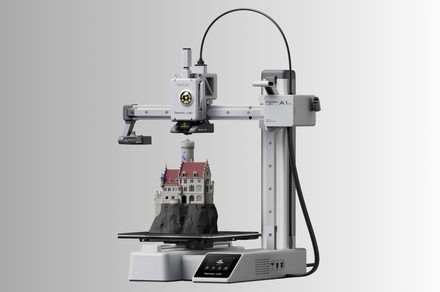
The “no-brainer” pick

This printer effectively killed the “budget tinkerer” category. The Bambu Lab A1 Mini offers the reliability of a $1,000 machine for a fraction of the price. It performs a full self-calibration suite (vibration compensation, bed leveling, Z-offset) before every single print, ensuring the first layer is perfect without you touching a thing.
- Why buy it: It is whisper quiet (<48dB), fast, and supports a multi-color upgrade (AMS Lite) if you want to print models with up to 4 colors later on.
- Best for: The true novice who wants to print, not fix a printer.
The budget workhorse

The “Ender 3” name is legendary in the community, but the V3 SE is the first iteration that is truly beginner-friendly. Unlike its predecessors, it takes about 20 minutes to assemble and features CR Touch auto-leveling and a strain sensor for auto Z-offset. It uses a “Sprite” direct drive extruder, which handles flexible filaments (like TPU) much better than older Bowden tube designs.
- Why buy it: You get a standard full-size build volume (220x220x250mm) for the same price as the smaller A1 Mini.
- Best for: Someone who needs a larger print area but wants to stay near the $200 mark.
The feature-rich middle ground

Elegoo has built a reputation for incredible value, and the Neptune 3 Pro is their standout FDM machine. It features a segmented heat bed that saves energy when printing small parts and dual lead screws for the Z-axis, which provides better stability than the single screw found on cheaper models. The removable touchscreen is intuitive, and the PEI magnetic sheet makes removing prints satisfyingly easy.
- Why buy it: It feels more “premium” than the Ender series, with better cable management and a sturdier frame.
- Best for: The user who wants a reliable, quiet workhorse for functional parts.
The resin pick (for miniatures)

If your goal is to print D&D miniatures or jewelry, standard plastic (FDM) printers won’t capture the fine details. You need resin. The Mars 5 Ultra solves the biggest pain point of resin printing: leveling. It features smart automatic leveling and intelligent detection that can pause the print if it detects a failure or lack of resin.
- Why buy it: The 9K resolution screen produces prints so smooth you can barely see the layer lines. It is currently 14% off.
- Best for: Gamers, model painters, and jewelry makers. (Note: Resin requires ventilation and gloves).
The “buy once, cry once” upgrade

If you have a flexible budget, this is the printer you will likely eventually upgrade to anyway. The P1S is a CoreXY machine, meaning it is significantly faster than the others on this list (up to 500mm/s). It is fully enclosed, making it safer for homes with pets and capable of printing advanced temperature-sensitive materials like ABS or ASA.
- Why buy it: It is a “set it and forget it” machine that can grow with you from beginner to expert. It is currently seeing a massive 36% discount, dropping it to $449.
- Best for: Beginners who want the best consumer experience available today.

I’m a writer, entrepreneur, and powerlifting coach. I’ve been building computers and fiddling with PC parts since I was a…
ChatGPT is down for a ton of users (Update: It’s back online)
Thousands report service failures as OpenAI rushes to patch “elevated error rates” blocking logins, voice mode, and response generation today.

Update: As of 1:17 PM PST, ChatGPT seems to be back online, generating responses and reading uploaded files.
The original report is as follows.
The AI Race is so hot that chatbot users are getting paid in real cash, iPhones, and TVs
With billions at stake and Apple watching closely, China’s AI giants are turning user acquisition into a high-stakes giveaway war ahead of next-generation model launches.

AI giants in China, including Alibaba, Tencent, and Baidu, are offering “red envelopes” or cash gifts to lure more users to their chatbots before the reported release of their new AI models later this month (via a Techxplore report citing AFP).
Alibaba, for instance, has formulated a budget of CNY 3 billion (around USD 430 million) to be offered as cash gifts to users of its AI app, Qwen. The promotional campaign begins on February 6, 2026, right in time for the Chinese New Year.
Why your next smartglasses might finally have crisp visuals
A micro-LED revolution could bring near-life-like resolution to AR and VR headsets.

A long-standing obstacle for augmented reality (AR) and mixed-reality smartglasses may finally be on the brink of being solved. A team of researchers led by Professor Sanghyeon Kim at the School of Electrical Engineering, in collaboration with Inha University and industry partners, has developed a micro-LED display technology capable of ultra-high resolution on the order of ~1,700 pixels per inch (PPI). That’s roughly three to four times sharper than most flagship smartphone screens today, with a level of detail that could make immersive wearable visuals far more convincing.
For context, Micro-LEDs are a form of self-emissive display technology that holds key advantages over OLEDs, including higher brightness, longer lifespan, and improved power efficiency, all critical for compact, battery-constrained wearables like smartglasses. Until now, engineering ultra-high-resolution micro-LED displays in such small form factors has been a major technical challenge, especially when it comes to creating tiny red pixels that work efficiently without consuming excessive power.


