


By
Matt Cannon
and
James Bickerton is a Newsweek U.S. News reporter based in London, U.K. His focus is on covering news and politics in Texas, as well as other general news across the United States. James joined Newsweek in July 2022 from LBC, and previously worked for the Daily Express. He is a graduate of Oxford University. Languages: English. Twitter: @JBickertonUK. You can get in touch with James by emailing j.bickerton@newsweek.com
News Editor
🎙️ Voice is AI-generated. Inconsistencies may occur.
President Donald Trump has announced 30 percent tariffs on goods from Mexico and the European Union (EU), taking effect on August 1, citing trade deficits and national security.
Newsweek contacted the Mexican Foreign Ministry and European Commission for comment via email on Saturday outside of regular office hours.
Why It Matters
On April 2, which he dubbed “Liberation Day,” President Trump imposed sweeping tariffs on most of America’s trading partners though just a few days later the majority of these were put on hold for 90 days following a negative market reaction.
Trump’s fresh announcement shows he remains committed to tariffs as a major economic policy tool despite the initial backlash.
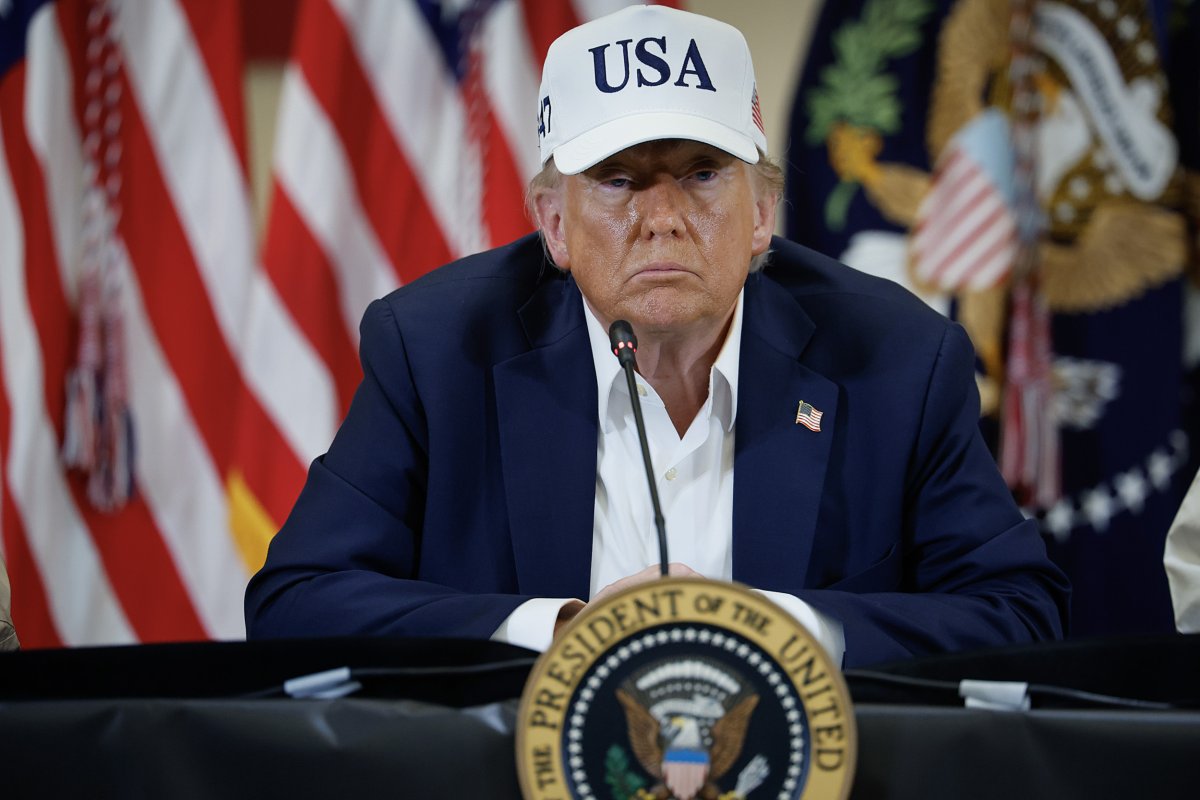
Chip Somodevilla/GETTY
What To Know
On Saturday President Trump shared letters on his Truth Social website shortly before 9 a.m. ET on Saturday that he had sent to Mexican President Claudia Sheinbaum and European Commission President Ursula von der Leyen.
The letters announced new tariffs of 30 percent on goods entering the U.S. from Mexico and the EU would begin on August 1, with these “separate from all Sectoral Tariffs.”
Trump added: “If for any reason you decide to raise your Tariffs and retaliate, then, whatever the number you choose to raise them by will be added onto the 30% that we charge.”
In his letter to Sheinbaum, Trump said the tariff on Mexico was a response in part to cartel activity and “the flow of Fentanyl” into the United States, adding it could be “modified, upward or downward, depending on our relationship with your Country.”
Trump told von der Leyen that the U.S. has “one of our largest trade deficits” with the EU, which he described as “a major threat to our Economy and, indeed, our National Security!”
Trump has sent more than 20 such letters to trading partners in recent days.
On Friday, Trump announced a 35 percent tariff on Canadian goods from August 1.
The president has also said he plans to impose a 50 percent tariff on Brazil, citing “attacks” on U.S. companies and the prosecution of the country’s former right-wing president Jair Bolsonaro, who is accused of plotting to overturn the country’s 2022 election but denies any wrongdoing.
Earlier this week a survey of 200 U.S.-based finance, procurement and supply chain professionals found 84 percent believe Trump’s tariffs will trigger a recession in the U.S. this year.
What People Are Saying
In a post on X, formerly Twitter, von der Leyen said: “A 30% tariff on EU exports would hurt businesses, consumers and patients on both sides of the Atlantic. We will continue working towards an agreement by August 1.
“At the same time, we are ready to safeguard EU interests on the basis of proportionate countermeasures.”
What Happens Next
It remains to be seen whether Trump’s fresh round of tariffs will spark the same negative market reaction that they did in April, and if so, whether the president will this time leave them in place or impose another delay.
Top stories
About the writer
Matt Cannon
and
James Bickerton is a Newsweek U.S. News reporter based in London, U.K. His focus is on covering news and politics in Texas, as well as other general news across the United States. James joined Newsweek in July 2022 from LBC, and previously worked for the Daily Express. He is a graduate of Oxford University. Languages: English. Twitter: @JBickertonUK. You can get in touch with James by emailing j.bickerton@newsweek.com

