

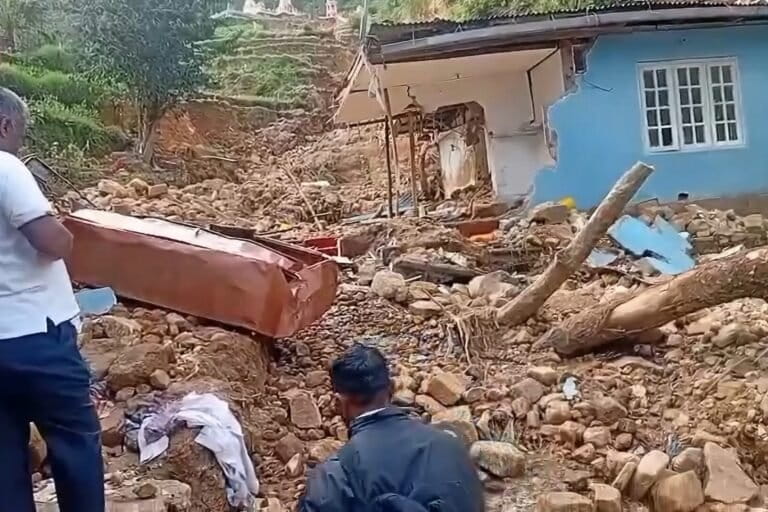
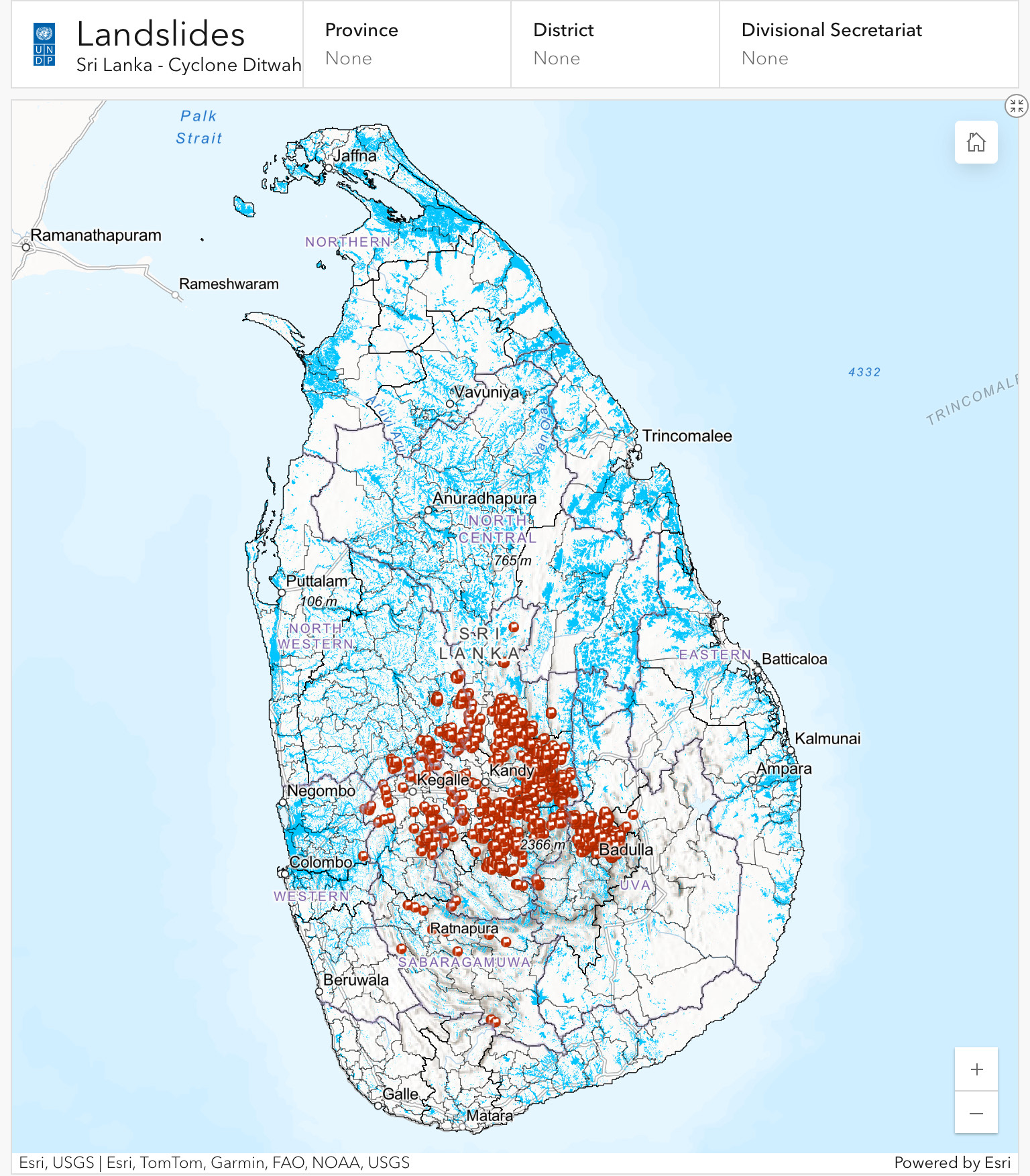
- More than 1,200 landslides were recorded in two provinces in Sri Lanka following Cyclone Ditwah in late November, resulting in crisis evacuations to safeguard vulnerable populations.
- Most of the disaster-impacted people continue to live in high-risk regions due to the lack of alternative housing.
- The country’s mandated institution for landslide risk management, the National Building and Research Organisation (NBRO), says it’s working on the first national building code to establish minimum standards for the design, construction and maintenance of hazard-resilient housing.
- Following the significant loss of lives and homes in the recent disaster, the NBRO is also introducing specific types of housing models suitable for flat and sloped terrains.
ARANAYAKA, Sri Lanka — Bandara Jayaratne from Beraliya, a village in the Aranayaka region in Sri Lanka, is among the fortunate individuals who escaped a landslide on Nov. 28 that occurred right behind his house.
Landslides aren’t a new phenomenon in this part of the country. In 2016, at least a 100 people died when a massive landslide occurred in the same area. It also displaced more than 2,000 families and affected some 350,000 people. Due to the vulnerability of this location, many families were evacuated in 2016, but most returned to their homes once the weather conditions improved.
Today, though, after the landslides triggered by Cyclone Ditwah at the end of November, many residents say they’re reluctant to return home, and are instead awaiting assistance from the government for relocation to safer sites.
“I managed to take my parents to a relative’s house near the town as a temporary measure,” Jayaratne, who is temporarily displaced, tells Mongabay. “Right now, I’m unable to go to my house as the roads are still blocked and my house is no longer safe to be inhabited.”
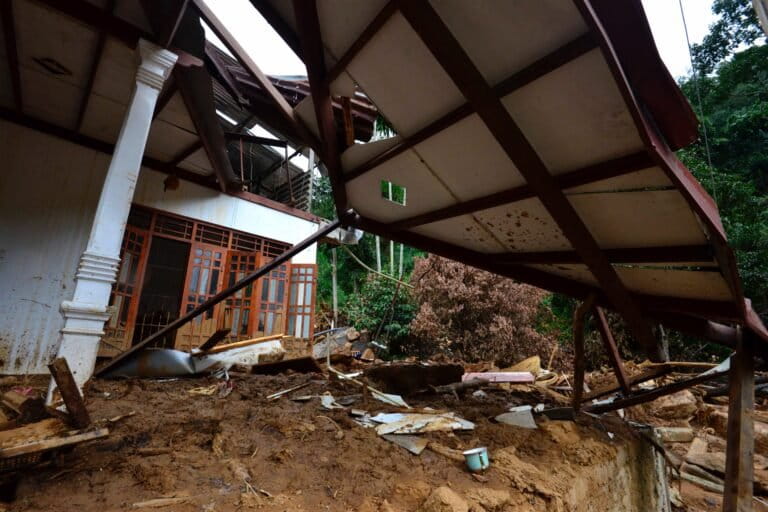
Cyclone Ditwah affected thousands of people like Jayaratne, who saw their homes damaged or outright destroyed by landslides. The recent most report from Sri Lanka’s Disaster Management Centre (DMC) says 6,228 houses were fully damaged, and more than 100,000 partially damaged.
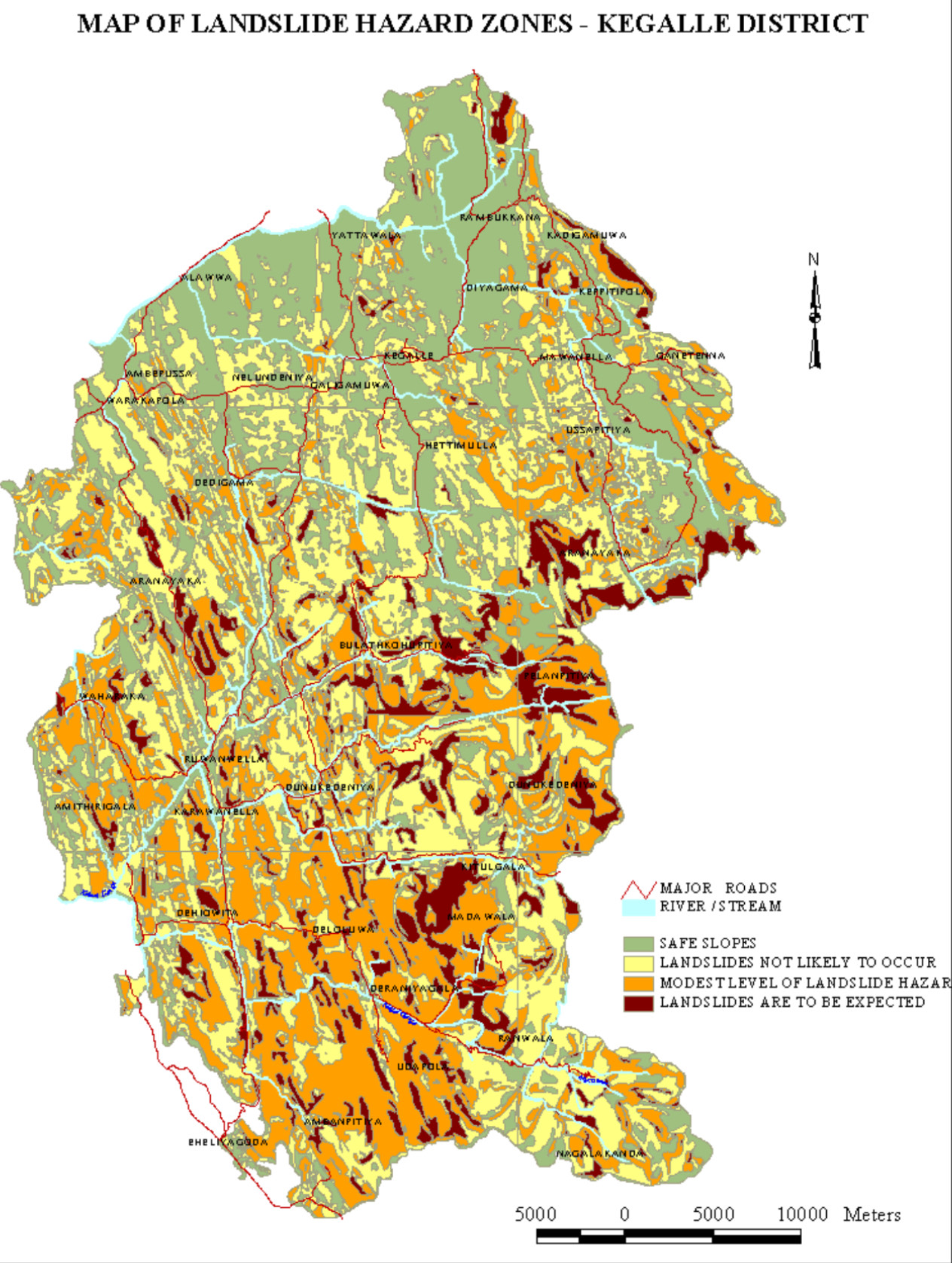
A landslide hazard zonation mapping initiative by the National Building Research Organization (NBRO) in 2016 identified large swaths of land in the districts of Kegalle, Badulla, Kandy, Matale, Kurunegala, Nuwara Eliya as “red zones,” flagging them as vulnerable to landslides. In the aftermath of Cyclone Ditwah, the NBRO detected a total of 1,247 landslides that were triggered in Central and Sabaragamuwa provinces, while geological anomalies continue to be monitored in the landslide-prone districts.
Wasantha Senadheera, a senior scientist at the NBRO, says these areas have been mapped using satellite imagery for precision.
“The vulnerability of existing houses in high-risk areas is still being assessed. But people continue to remain in high-risk areas, mainly due to their inability to find suitable housing in alternate locations and to avoid disruption to their livelihoods,” he said.
Disaster-resilient housing
Ditwah has brought many lessons, but a significant one, experts say, is about Sri Lanka’s need to prioritize the building of disaster-resilient housing as the only way forward considering the island’s vulnerability to natural disasters. Sri Lanka also stands at the crossroads of a climate crisis due to rising temperatures, erratic weather patterns and intensifying natural disasters threatening natural ecosystems, communities and the economy.
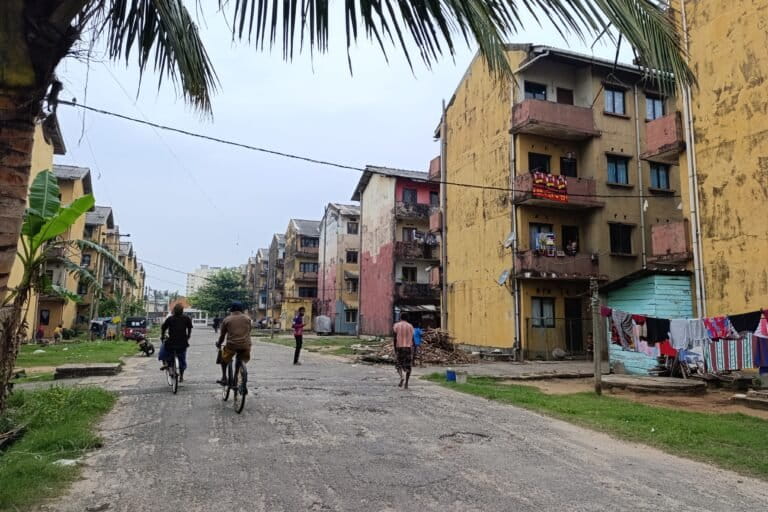
The concept of disaster-resilient housing isn’t new to Sri Lanka. Following the 2004 Indian Ocean tsunami, efforts were made to introduce new homes that could withstand a range of disasters and effectively protect coastal populations, which make up more than a third of the country’s total population. The government at the time also introduced an exclusion zone that meant no new homes could be built within 100 meters (330 feet) of the coast; this has frequently been breached since then.
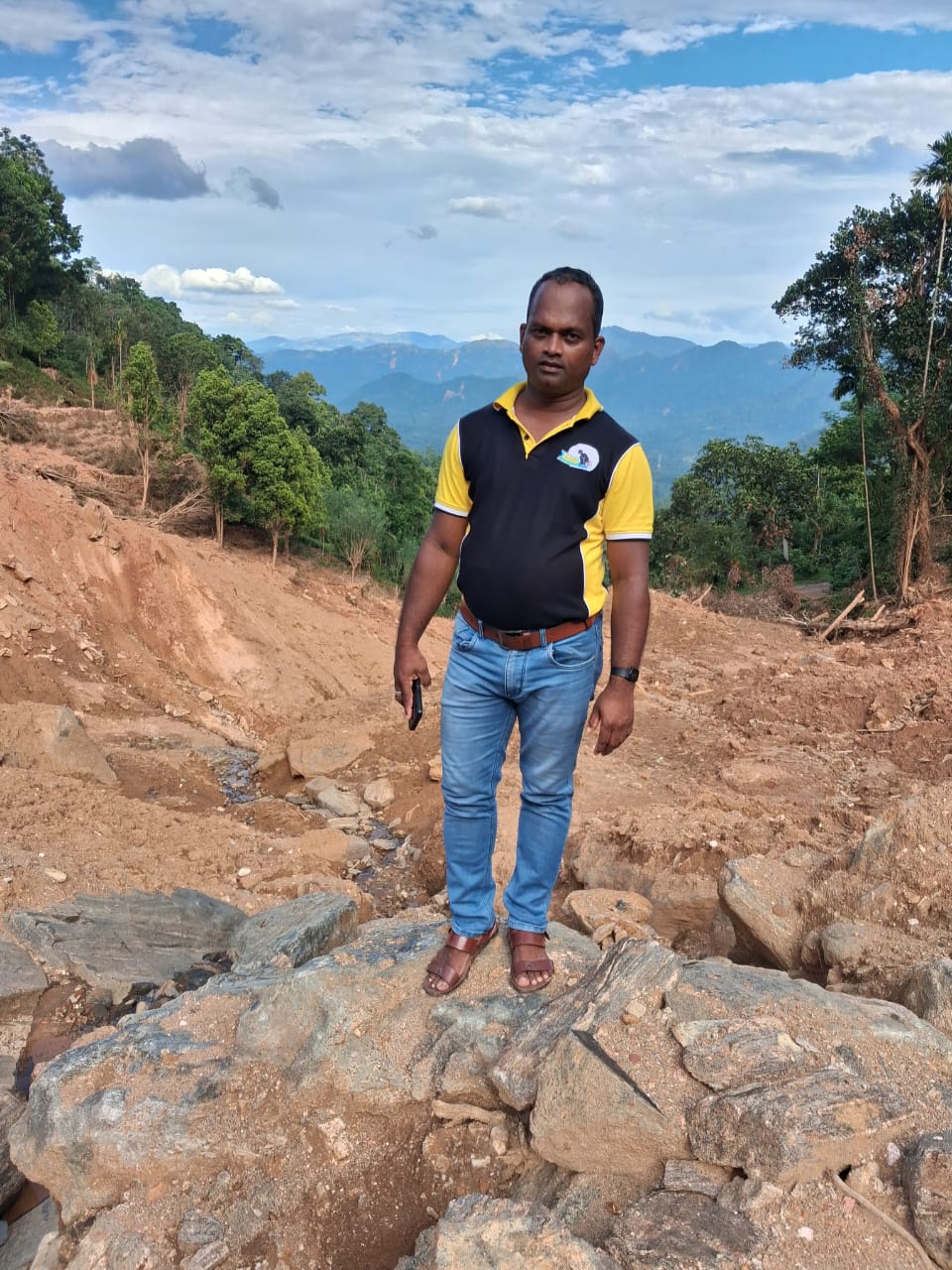
But unlike the 2004 tsunami, which ravaged only coastal regions, Cyclone Ditwah this year left a trail of destruction in at least 22 districts and devastated the island’s critically important Central Highlands, which experienced a record number of landslides.
Sujeewa Nissanka, director of the Institute of Town Planners (ITPSL), says the lessons from post-tsunami resettlement aren’t necessarily applicable this time around.
“[Back then] we redid maps, assessed high tide levels, contours and other indicators. But the situation is different this time,” he tells Mongabay. “The country’s National Physical Plan identifies the Central Highlands as a fragile zone. This region requires special protection as it is a watershed area and significantly contributes drinking water to the people. Once again, we need to rethink priorities and plan for resilience.”
Decentralizing populations
According to Nissanka, a policy decision is needed on decentralizing the hill country population, currently concentrated in a fragile region. However, to find working solutions, resettlement requirements must factor in people’s lifestyles, livelihoods, and social and cultural impacts, in addition to the suitability of the terrain.
“An integrated vision is required, and we have set up a volunteer task force at ITPSL to support government institutions in this regard,” he says.
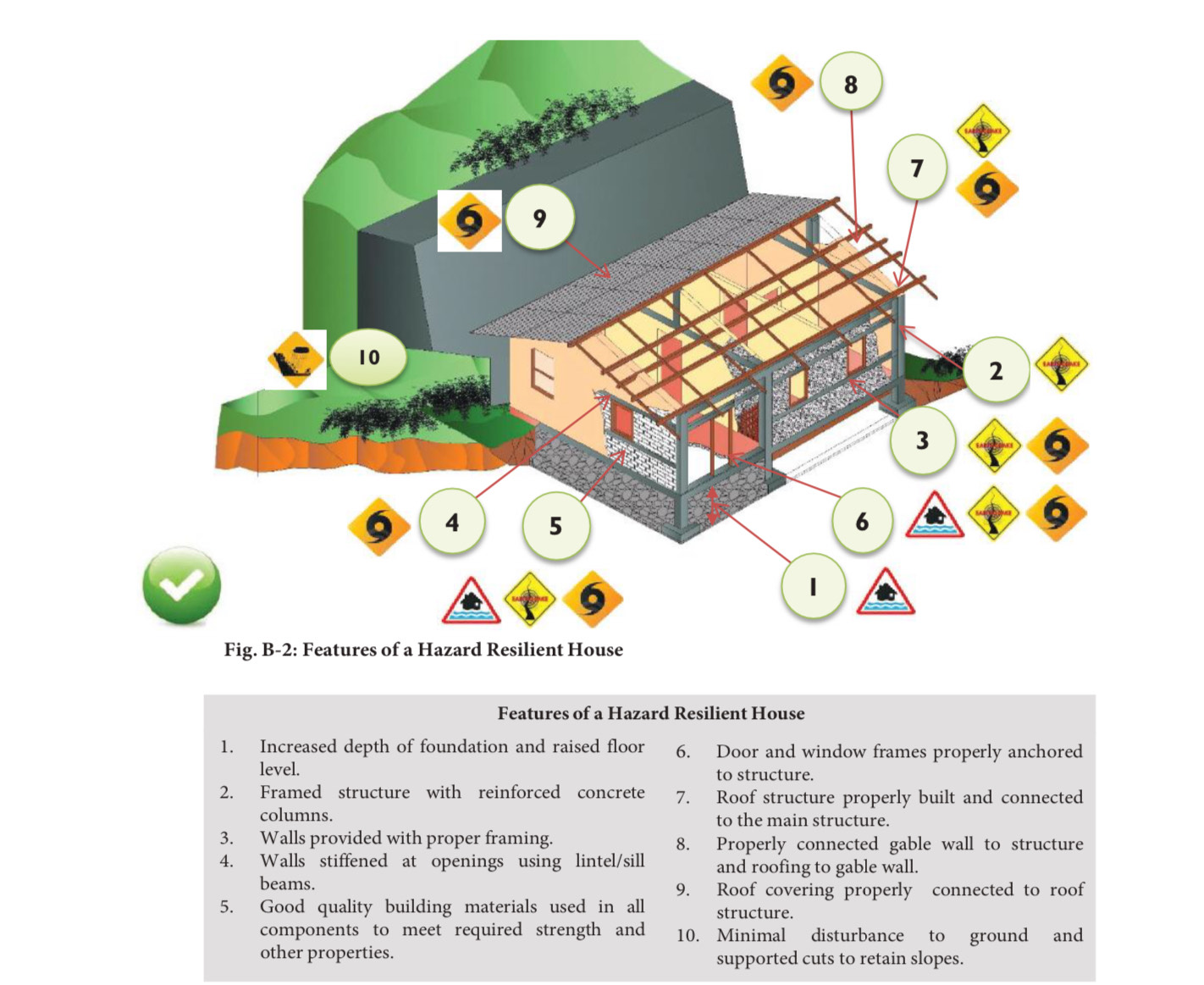
A 2018 study on the concept of disaster-resilient housing for resettlement planning highlights the importance of structural continuity of design, ensuring that loads flow smoothly from the roof all the way to the ground. Asiri Karunawardena, director-general of the NBRO, says resilient features such a column frame structure to the foundation of a house would fortify and enable the building to withstand minor tremors and prevent a total collapse.
“People can renovate their homes if cracks appear or minor damages occur, as the foundation is strong and intact,” he says. “If the house is in an area with heavy winds, we recommend stronger roofs with additional hooks.”
The study explains features that can ensure structural continuity of a house. The plinth beam, a robust base that distributes the weight of the wall evenly to the ground, connecting columns to the ground level, is a key feature. A sill beam, horizontal structural component placed at the base of a wall or a framework, can support the wall while connecting it to the columns. The roof should be connected to the tie beam, a horizontal structural element that holds the entire structure together.
“To minimize damage, the government should hereafter strictly consider holistic housing construction, from land selection to construction methods and material,” Karunawardena says. “At the predesign stage, it is necessary to assess whether a land is prone to landslides or flooding.”
However, the detailed disaster-resilient features of a given house are highly site-specific, says Sunela Jayawardena, a leading environmental architect. She notes that disaster-resilient features differ from location to location.
“A design must be site-specific to be reasonably successful in its disaster resilience. and successful disaster resilience is relative,” she says.
To create awareness among communities, the NBRO has recently introduced two types of housing models considered suitable for flat and sloped terrains.
New housing models
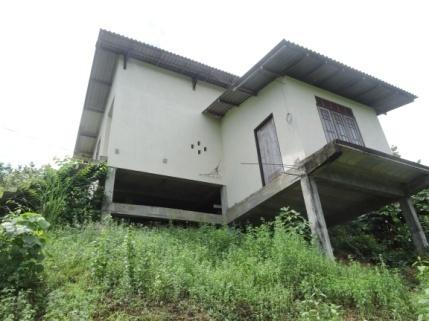
In Beraliya village, Jayaratne was two years into the construction of his house on a hilly slope when the landslide struck in 2016. He finally completed it at the end of 2020, only to see it rendered unsafe by this year’s landslide.
He tells Mongabay he knew nothing about the specific housing models to follow when building on a slope. His is a widely shared experience that highlights existing gaps in the approval process for construction by government authorities, where vulnerable communities are unaware of both risks and solutions.
According to Sandun Madhusanka, chair of the Civil Engineering Sectional Committee at the Sri Lanka Institute of Engineers (IESL), the structural integrity of a house is paramount. Yet people seldomly consult engineers when building homes of two or three stories.
“Plans are drawn by inexperienced people to avoid the time-consuming process of the divisional secretariats, grassroot administrative units that usually handle the process,” Madhusanka tells Mongabay. “Little wonder that these hasty constructions on unstable terrain collapse easily. If there could be strict enforcement of a policy prohibiting people from building houses in hilly slopes, marshlands and other sensitive areas, damage could be minimized.”
The NBRO has also published a hazard-resilient housing construction manual, detailing suitable construction materials. These include cement, aggregate for concrete, types of masonry units, among others.
Nissanka, from the town planners’ institute, also predicts a future demand for materials, skilled labor and professionals such as engineers, architects, quantity surveyors and technical officers, and warns of limitations in short-term supplies of cement, granite, sand and other materials.
“If the government could relax regulations on transporting sand, obtaining granite and so on, the demand could be met in the long-term,” he says.
Meanwhile, the NBRO is drafting the country’s first ever national building code to stipulate minimum requirements to ensure the structural stability of a building. It also includes a resilience code, highlighting soil stability and foundational and architectural requirements.
Improving early warning systems
Anton Jayakody, Sri Lanka’s deputy environment minister, says there are plans in the works to install a fully functional Doppler radar system that would provide earlier warning of cyclones once it’s operational in the next two years.
“Even though we had this technology, previous governments were only keen on installation but made no use of it,” he tells Mongabay. “We will seek Japanese assistance to install the technology. In the past, we forecasted weather using satellite imagery but there were limitations in accuracy. With Doppler radar, we provide accurate forecasts of rainfall, floods, and storm formation. However, not even developed countries have the technology to issue foolproof warnings against disasters.”
Nissanka says the aftermath of Cyclone Ditwah should serve as an opportunity to implement appropriate policies and regulations to ensure the safety of people, property and ecosystems against ever more intense and frequent extreme weather events.
Banner image of a house damaged due to a landslide in Kandapola in the Central province district of Nuwara Eliya, courtesy of Kithsiri De Mel.
Credits


