

What happened to mortgage rates this week
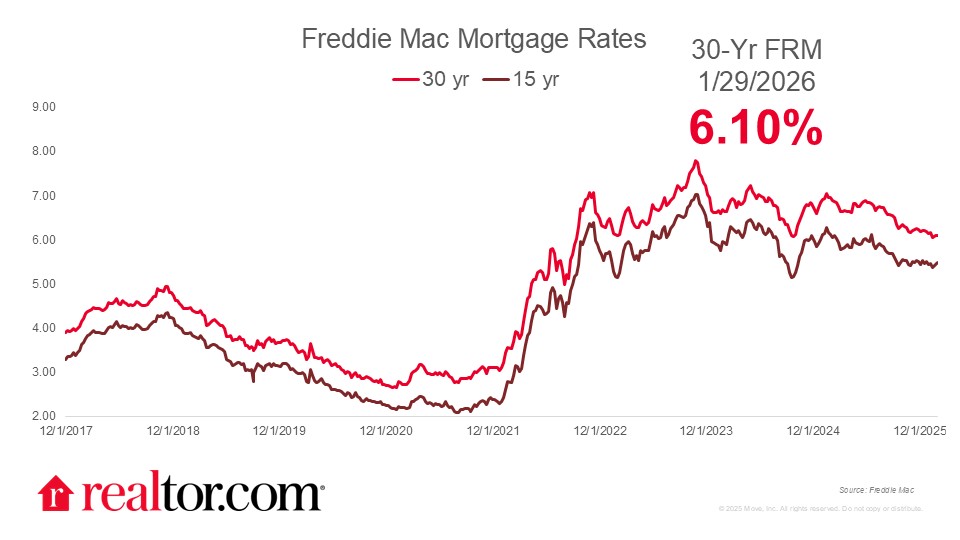
The Freddie Mac 30-year mortgage rate edged up by 1 basis point to 6.1% this week as all eyes are on January’s FOMC meeting. While mortgage rates don’t move one-for-one with the Fed funds rate, the Fed’s stance sends important signals to bond markets — especially the 10-year Treasury yield, which mortgage rates follow closely. The Fed’s decision to hold rates steady reinforces the view that policymakers remain cautious and data-dependent, waiting for clearer evidence that inflation is sustainably moving toward target before easing policy. At the same time, January consumer confidence fell to its lowest level in more than a decade, reflecting growing concerns about the job market and the broader economy—conditions that could temper housing demand. Adding to the uncertainty, ongoing geopolitical tensions are contributing to volatility in Treasury yields, making it more likely that mortgage rates remain choppy rather than move decisively lower in the near term.
What it means for the housing market
The 30-year mortgage rate has eased into the low-6% range, but borrowing costs remain high enough to strain affordability and keep many homeowners on the sidelines, limiting new listings. Recent outstanding mortgage data show that loans with rates above 6% now make up a growing share of the market, surpassing those below 3%, indicating that some buyers and sellers are moving forward despite higher financing costs. Taken together, these signals point to a market that is gradually adjusting to higher rates. While slightly better rates have supported modest increases in sales and helped temper affordability pressures, the recovery is expected to be slow and uneven until rates move significantly lower and inventory expands further.


