Home Fossil Energy Exclusive interview with Eni: Gas and LNG at crux of multiple FIDs as ‘game-changing phase’ edges closer
With a diversified pipeline of projects spanning Africa, Asia-Pacific, the Americas, and the East Mediterranean, Italy’s energy giant Eni is set on pursuing a disciplined exploration strategy focused on rapid monetization and a pragmatic, technology-driven approach to emission cuts by combining low-cost reserves, fast-track development, and cross-border collaboration. The firm’s 2026 horizon spotlights multiple final investment decisions (FIDs) for gas and liquefied natural gas (LNG) projects.
Content:
- Upcoming FIDs on Eni’s 2026 agenda
- Decarbonization journey in full swing
- Gas poised to play ‘pivotal’ part in energy transition story
Eni’s spokesperson highlighted during a recent interview with Offshore-Energy.biz the company’s aim to keep momentum strong in 2026 by driving project progress and making strategic, selective investments with a focus on initiatives backed by robust commercial frameworks, regulatory clarity, and cost competitiveness to strengthen its global position.
The Italian player’s representative underlined: “Looking ahead, we have a strong and visible pipeline of high-quality projects ready to ramp up such as Congo LNG, Angola NGC, and others in execution such as Coral North in Mozambique, Structure A/E in Libya, Hail & Gasha – to name a few.
“Furthermore, we are working to accelerate additional high value projects such as: Kutei North Hub and Gendalo & Gandang in the South Hub (Indonesia), major gas development in the East Med area (Cyprus), Baleine Phase 3 (Ivory Coast), Greater PAJ (Angola), and Argentina LNG (Argentina).”
The company claims that its exploration strategy remains disciplined and value-driven, prioritizing near field/ILX opportunities and accelerating time to market for rapid monetization. Simultaneously, the European giant intends to pursue selected high-impact prospects in innovative geological plays within its core regions, with rapid value creation as its defining objective in 2026.
The spokesperson elaborated: “We will build on what differentiates us: discovering low-cost reserves, developing them swiftly and competitively, and maintaining a portfolio that is robust, balanced, and aligned with market dynamics across geographies and commodities. Another key strategic shift is underway in our industry. Historically, each country has developed its own resources independently.
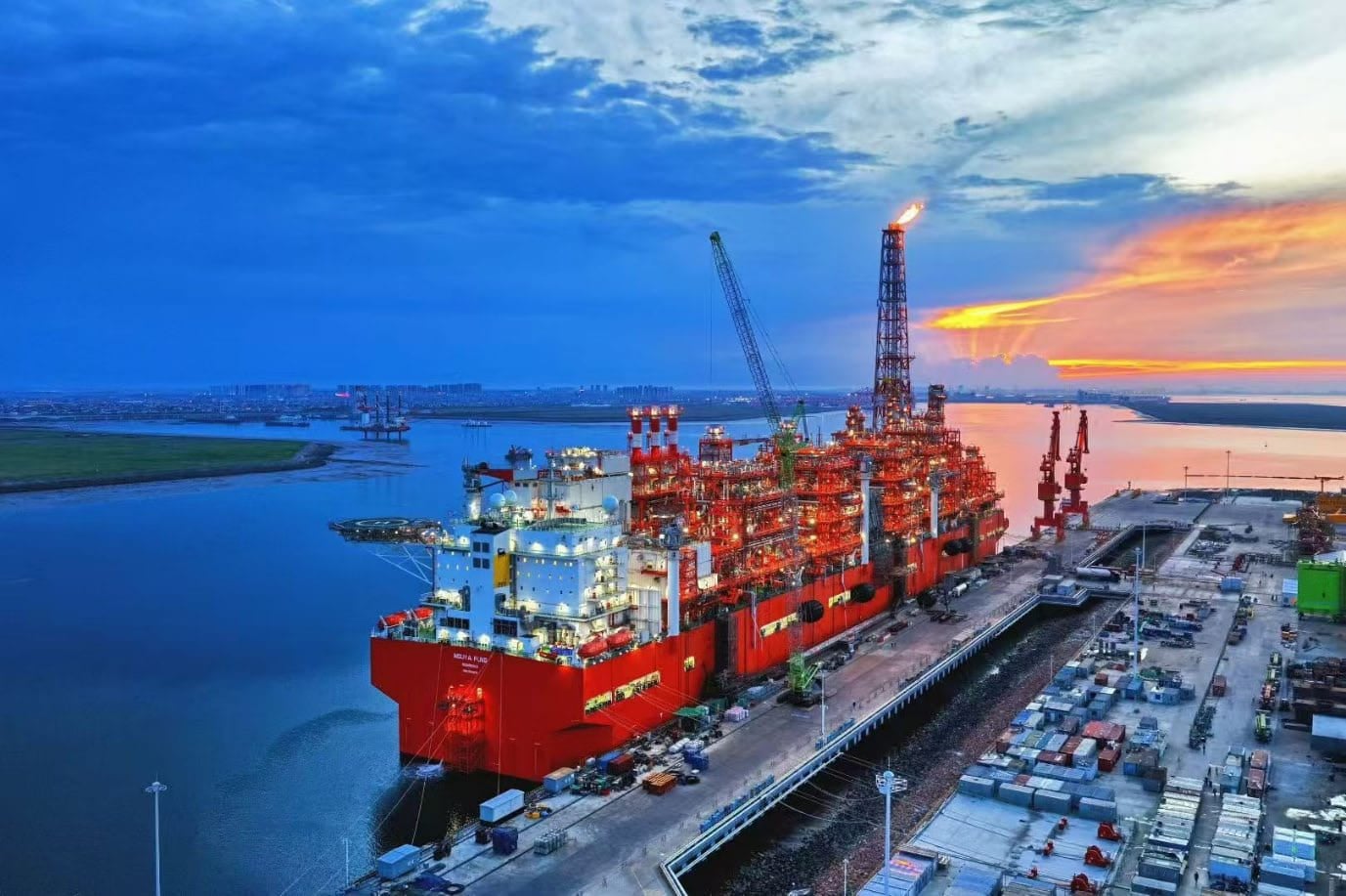
“Today, this paradigm is rapidly evolving toward a collaborative model that engages all stakeholders (local authorities, operators, and partners), while repurposing existing infrastructure and facilities. This approach, exemplified by circular-economy initiatives such as the conversion of vessels in our Congo LNG project, accelerates time-to-market, and enhances cost efficiency.”
With value creation, energy security, and a low-carbon strategy at the heart of its growth, Eni explains that its projects are designed with a competitive cost structure, drawing on its dual-exploration model and fast-track, phased development approach, as it targets locations that provide access to premium markets and strong production increase to ensure efficiency and profitability.
The Italian heavyweight pinpoints Africa as a cornerstone of its business, complemented by its progressive expansion into new regions worldwide. The firm has strengthened its position in Asia-Pacific through the recent business combination with Petronas, in a market where energy demand is set to rise.
The oil and gas major is also advancing its footprint in the Americas, as highlighted by its partnership with Venture Global and by the Argentina LNG project with YPF, while the East Mediterranean hub represents another strategic growth area, where the firm is unlocking synergies between Cyprus and Egypt through existing infrastructure.
The company’s spokesperson added: “We are entering a game-changing phase, particularly in selected geographies, where cross-border developments can unlock significant value by leveraging shared facilities. A prime example is the Cronos development in Cyprus, where the project leverages existing infrastructure in Egypt to maximize returns and create sustainable growth across regions.”
On the LNG side, Eni has recently expanded its sale customer base securing new long-term contracts in strategic emerging market such as Thailand and Türkiye, in line with the company’s ambitions to grow its LNG portfolio to approximately 20 million tons per annum (mtpa) by 2030. The firm believes that its strength lies in geographical diversification, as it embraces the unique opportunities each region offers.
Eni’s spokesperson outlined: “Looking ahead, 2026 is expected to deliver additional FIDs, with U.S. to remain the key contributor, although not at the extraordinary scale seen in 2025. 2026 should remain an active year for project progression and selective investment decisions, with activity increasingly focused on projects underpinned by solid commercial structures, regulatory certainty and competitive cost.
“In this evolving landscape, backfill projects and innovative development partnerships will play a critical role. By leveraging existing liquefaction infrastructure or integrated value chains, backfill developments can significantly reduce capital costs and accelerate time to market—advantages increasingly valued by investors in an environment of tightening project economics and increasing competition for capital.”
Upcoming FIDs on Eni’s 2026 agenda
The Italian energy titan is targeting multiple strategic FIDs in 2026, including additional LNG production via the Bontang liquefaction plant in Indonesia, focusing on exploiting existing gas infrastructures and existing LNG train capacity.
The company is also set on the fast-track monetization of East Mediterranean gas through Egypt’s Damietta LNG facility, allowing new assets in Cyprus to be developed as LNG, thus enabling competitive access to regasification markets.
The firm claims that its participation in the integrated upstream and midstream Argentina LNG development, in collaboration with YPF, is focused on exploiting gas volumes from Vaca Muerta basin through two floating LNG (FLNG) units, positioning Argentina as a rising LNG supplier to global markets.
Eni’s spokesperson underscored: “These initiatives align with Eni’s broader strategic objectives of expanding its gas and LNG portfolio through disciplined, capital-efficient investment, leveraging commercial synergies, reinforcing energy security, and strengthening long-term commercial positions in key regions.”
The company maintains a strong presence in deepwater exploration and production in the U.S Gulf, where it participates in 39 exploration and development blocks, of which 16 are operated by the firm, in the deep and conventional offshore of the Gulf of America (the U.S. Gulf of Mexico).
The Italian player’s main operated U.S. fields in production are Allegheny, Appaloosa, Pegasus, Devils Towers, and Triton (100% interest), and Longhorn (75% stake). In addition, Eni participates in the fields of Europa (32%), Medusa (25%), Lucius (14.45%), Frontrunner (37.5%), and Heidelberg (12.5%).
The European energy major participated in the Gulf of America OCS Oil and Gas One Big Beautiful Bill Act Lease Sale 1 (BBG1) in December 2025 for a new exploration license in the Gulf of America in the Mississippi Canyon area, one of the company’s main production areas in U.S. Gulf.
The firm’s spokesperson stated: “Eni’s upstream activities in Europe remain a strategic pillar of our portfolio: in the United Kingdom, Eni has strengthened its position through the combination with Ithaca Energy, creating one of the leading independent operators in the UK Continental Shelf.
“In Norway, through Vår Energi, Eni continues to invest in high-value offshore projects in the North Sea and Barents Sea, prioritizing assets with strong returns and low emissions. Key recent developments include major projects such as Balder X and Johan Castberg, which started production in 2025.”
Decarbonization journey in full swing
The Italian player is actively deploying a broad portfolio of both established and innovative technologies to slash emissions from exploration and production activities, pursuing efficiency improvements, which are applied to existing production fields and the design and construction of new facilities.
Eni’s spokesperson noted: “Examples include electrification of assets where a stable grid is available, integration of renewables (solar, wind), adoption of more efficient equipment and process optimization, digitalization and advanced monitoring (e.g., predictive maintenance, AI, drones, acoustic sensors) to enhance asset integrity and minimize environmental risks.”
Through its subsidiary, Plenitude, the Italian giant is present in the renewable energy sector as well, with a predominant focus on wind and solar power to achieve the goal of over 15 GW of installed renewable energy capacity by 2030, leveraging international partnerships and maintaining a position on emerging technologies such as floating wind.
The company’s spokesperson said: “Plenitude has a leading position in Italy with several floating projects through GreenIT, an Italian joint venture (Plenitude 51%, CDP Equity 49%) and in partnership with Copenaghen Infrastructure Fund. In Northern Europe, Plenitude operates through Vårgrønn, a joint venture with HitecVision.
“Vårgrønn holds a participation in Dogger Bank, the biggest Offshore wind plant currently under construction, and in the Greenvolt project, which won the first CfD for a commercial size floating project in UK.”
The company points out that the energy efficiency measures implemented during 2024 resulted in an effective primary energy saving of over 308 ktep/year compared to baseline consumption, mainly from upstream projects (over 82%), which led to a reduction in emissions of approximately 778,000 tonnes of CO2 equivalent.
The spokesperson continued: “The most significant interventions included structural process upgrades such as the revamping of gas compression units for export or reinjection, equipment adjustments to new operating conditions, thermal integration between neighboring plants, as well as management and operational actions like optimization of production networks, optimization of the power generation system, and electrification with imports from the national electricity grid.”
If Scope 2 emissions are also considered, the net CO2 savings from energy-saving projects rise to about 816,000 tonnes of CO2 equivalent. Among the energy efficiency actions, the firm emphasizes that other measures to cut Scope 1 GHG emissions from stationary combustion are also monitored, such as fuel switching (e.g. diesel versus fuel gas) and the use of renewable energy.
The Italian firm’s spokesperson stated: “Eni’s emission reduction strategy in E&P is multi-pronged, combining immediate deployment of mature technologies (electrification, flaring down, CCS, digitalization) with investment in breakthrough solutions (fusion, quantum computing).
“This approach is pragmatic, scalable, and tailored to the characteristics of each asset and geography, with a strong focus on operational excellence, innovation, and partnerships.”
Gas poised to play ‘pivotal’ part in energy transition story
Eni expects the offshore oil and gas exploration and production market to enter a phase of “disciplined recalibration” as companies navigate a lower-price environment and reassess capital allocation priorities, prompting operators to streamline portfolios, optimize existing assets, and selectively advance new offshore projects, where breakevens and long-term fundamentals remain robust.
The spokesperson told Offshore Energy: “We will continue to concentrate on gas developments and pursue disciplined and selective investment strategies, focusing on gas projects with low breakeven costs and industry-leading time to market, leveraging our operational excellence to rapidly transform resources into production. This approach allows us to preserve a resilient, high-value portfolio while ensuring long-term sustainability and competitiveness.
“Gas will continue to play a strategic role in the energy mix, supporting both security of supply and the transition to lower-carbon energy. Looking ahead to 2050, we foresee a market defined by greater selectivity and an intensified focus on emissions reduction, digital innovation through AI, and operational excellence.”
Eni is convinced that the overall offshore E&P remains strategically positioned to supply secure, competitive, and lower-intensity barrels during the transition period, while adapting to long-term structural shifts that will redefine the global energy system heading toward 2050.
The spokesperson concluded: “Structural tailwinds, such as rising global energy demand and the pivotal role of gas, will continue to support the sector. At the same time, headwinds including accelerating decarbonization pressures and tighter financial conditions will demand unwavering discipline, strategic clarity, and agility to sustain long-term value creation.”