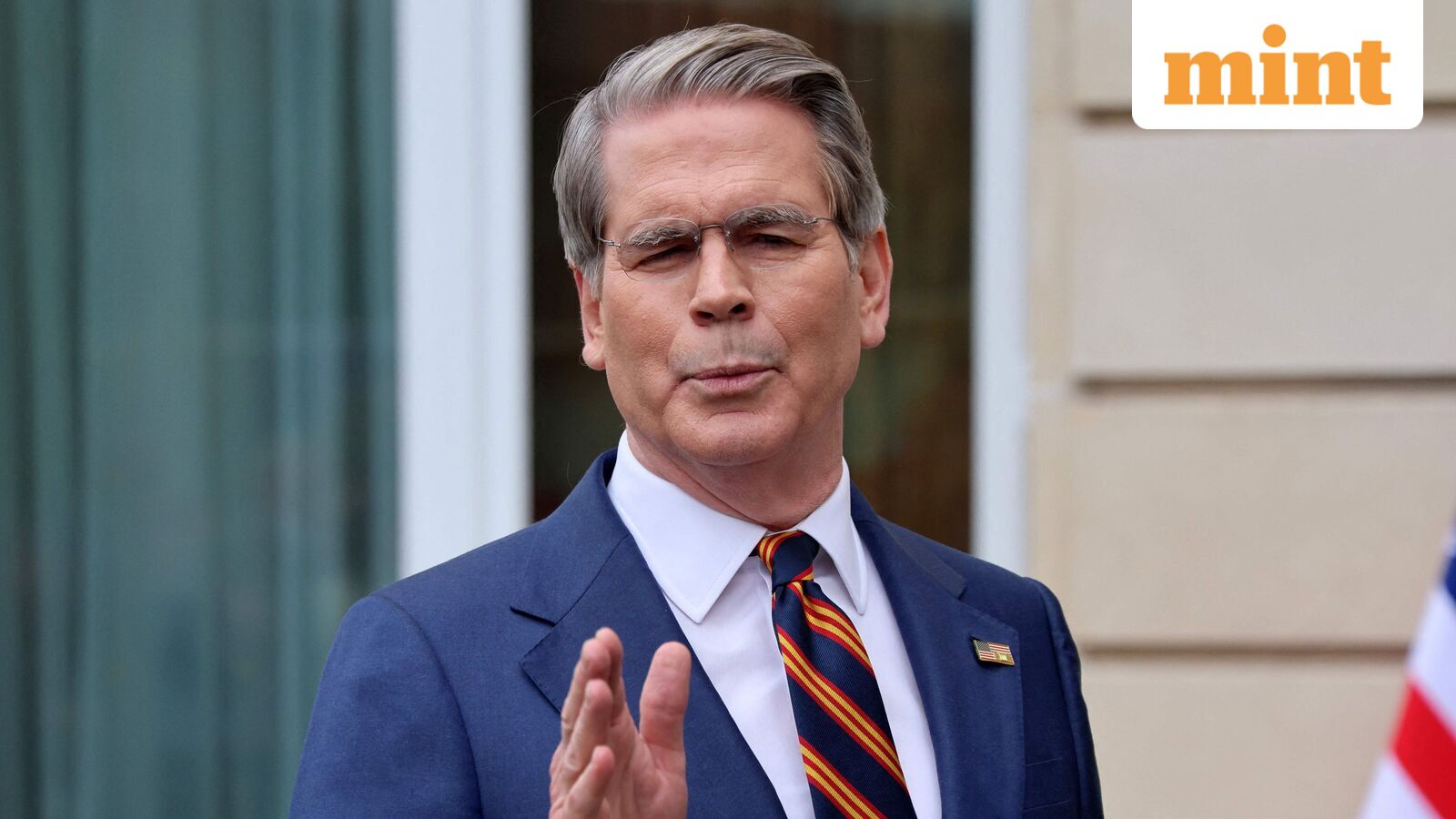
Amid the ongoing conflict in the Middle East, US Treasury Secretary Scott Bessent defended the US strikes on Iran. His remarks came a day after President Donald Trump threatened to obliterate power plants in Iran, if it fails to reopen the Strait of Hormuz.

US Treasury Secretary Scott Bessent, on Sunday (local time), defended the US strikes on Iran, saying “sometimes you have to escalate to de-escalate,” NBC News reported.
His remarks followed a post by US President Donald Trump on Truth Social, where he gave Iran 48 hours to reopen the Strait of Hormuz and warned that Tehran’s power plants could be obliterated if it failed to act.
Backing Trump’s warning, Bessent said this was the only kind of messaging Iran responds to. His comments were in reference to the US and Israel’s Operation Epic Fury and Operation Rising Lion, launched in late February to strike Iranian infrastructure, shortly after Washington and Tehran concluded another round of talks on Iran’s nuclear programme.
Iran vows retaliation
Hours after Trump warned of possible strikes on Iran’s power infrastructure, a spokesperson for the Islamic Republic said on Sunday that any attack on its oil facilities would be met with a similar response.
State-run IRNA cited Col. Ebrahim Zolfaqari as saying that if Iran’s fuel and energy infrastructure is targeted, then fuel, energy, IT systems, and desalination facilities used by the US and its regional allies would also be hit.
As tensions continue to rise in the Middle East, Washington has so far refrained from directly targeting Iran’s oil infrastructure.
Bessent on US strikes on Kharg Island
On Sunday, Bessent also addressed earlier comments about Kharg Island, a key centre for Iran’s oil production. Speaking to Fox Business, he said military assets on the island had been destroyed, adding that it remains to be seen whether it could eventually come under US control.
While he did not spell out what turning Kharg Island into a US asset would involve, Bessent told Meet the Press that all options remain open, including the possibility of deploying US troops to secure the site.
Trump says Kharg Island totally decimated
Before Bessent’s remarks, Trump said last week that the military had destroyed Kharg Island. He added that he had no role in targeting energy infrastructure, noting that rebuilding such facilities would take years. In the same interview, he suggested the US military could strike the site again.
In that interview, the president also said he is working with international partners on plans to reopen the Strait of Hormuz, a crucial route for global oil shipments that has been shut since the conflict began. The disruption has pushed oil prices higher globally and increased fuel costs in the US as well.
Oil prices to jump on Monday?
According to a Reuters report, oil prices are likely to rise on Monday after the US and Iran threatened to target energy facilities. Over the weekend, the prices closed at their highest level in nearly four years. On Friday, international benchmark Brent crude futures for May delivery rose 3.26% to settle at $112.19 per barrel, marking their highest level since July 2022. Meanwhile, US crude climbed 2.27%, or $2.18, to close at $98.32 a barrel.
Days after the war began, Iran closed the Strait of Hormuz, the arterial waterway responsible for nearly one-fifth of the world’s oil supply. The move rattled the global energy markets and sent crude oil prices to touch $120 a barrel before retreating.