The Trump administration is moving to force Afghans who worked alongside the U.S. military either back to the war-torn nation or to the Democratic Republic of Congo (D.R.C), veterans and refugee advocates say. Those Afghans have been stranded at a former U.S. military base in Qatar since 2021, and fear imprisonment and execution by the Taliban’s government if they are pushed back to Afghanistan. Experts are warning of a humanitarian disaster that will further degrade the United States’ global reputation if Congress fails to intervene.
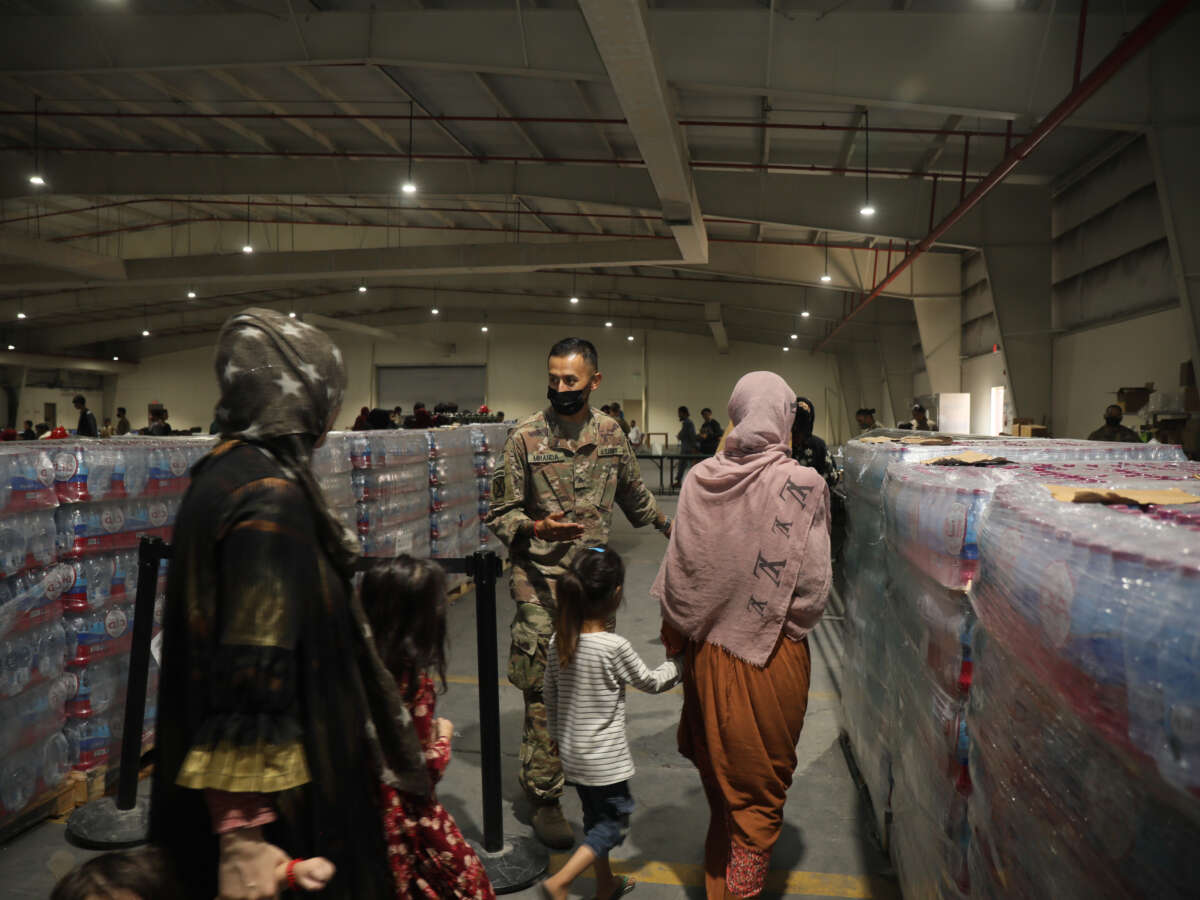
About 1,100 Afghans and their families remain in prison-like conditions at Camp As Sayliyah in Doha, a transitory refugee compound that Qatar and the U.S. have been pushing to close for months. The majority are women and children; some are family of U.S. military members. Others served alongside U.S. troops as interpreters, medics, drivers, and special operations soldiers in the fight against the Taliban.
“Our children ask us every week where we are going,” Afghan residents of Camp As Sayliyah said in a collective statement this week. “We do not know what to tell them.”
Afghans who worked with U.S. forces were promised resettlement in the U.S. and heavily vetted, but the Trump administration froze the resettlement program in 2025 shortly after Stephen Miller and other anti-immigrant hardliners took control of the White House. Earlier this year, Republicans in Congress quietly removed bipartisan language from must-pass legislation to authorize visas for the Afghans in Qatar, effectively blocking a program that has resettled thousands of Afghans who worked alongside the U.S. military since the Taliban returned to power in Kabul five years ago.
Now, the Trump administration is reportedly in talks with the D.R.C. to relocate the 1,100 people stuck at Camp As Sayliyah, according to The New York Times. After decades of internal conflict and devastating wars in surrounding nations, the D.R.C. already hosts roughly 600,000 refugees. But the refugee support group AfghanEvac say the D.R.C. is not meant to be a viable option for the Afghans stuck at Camp As Sayliyah.
Instead, critics of the plan say the administration is preparing to give the refugees an impossible choice: Either go back to Afghanistan or be resettled in the D.R.C., a country the U.S. government warns against visiting “due to crime, and civil unrest” and risk of armed conflict in some regions, including intense fighting with rebel groups on the eastern border with Rwanda. If the Afghans instead return to Afghanistan — the only country where they have legal status — then President Trump can falsely claim they did so “voluntarily.”
In their collective statement, the Afghans said they cannot go to the D.R.C. “We have no family there. We have no language there. We have no legal status there. It is a country in its own war. We have been in enough war. We cannot take our children into another one.”
They also cannot return to Afghanistan. “The Taliban will kill many of us for what we did for the United States,” the statement said. “This is not a fear. This is a fact. The United States knows this because the United States is the reason we cannot go home.”
“This is not them trying to resettle 1,100 Afghans, it is them trying to send 1,100 Afghans back to Afghanistan where the Taliban has a documented record of killing people with U.S. service records,” said Shawn VanDiver, a U.S. military veteran and president of AfghanEvac, during a press conference on April 22.
“No One From the State Department Told Us”
Sean Jamshidi, an Afghan American and former U.S. Marine sergeant, said his brother is among the 1,100 stuck in Qatar after waiting for years to resettle in the United States. During his own military service, Jamshidi was posted at the U.S. embassy in the D.R.C., a country he said is not a viable option for his brother or any of the refugees stuck in Qatar. Instead, he said the Trump administration is engaging in political theater to obscure an epic betrayal.
“This is a country with a long history of corruption and war, and in many places lacks basic services,” Jamshidi said of the DRC. “The conditions on the ground today are no better than what I saw in the many places that I worked, and the U.S. government knows this.”
“The Taliban will kill him for what he did … This is not hypothetical; this is documented reality.”
Jamshidi said his brother worked alongside U.S. troops fighting the Taliban during the war in Afghanistan and was vetted to resettle in the U.S., where he has family and an established community. However, given the “choice” between becoming a refugee in the D.R.C. and returning to Afghanistan, Jamshidi said his brother would likely end up back in Afghanistan.
“The Taliban will kill him for what he did,” Jamshidi said. “This is not hypothetical; this is documented reality.”
The State Department said in a statement to Truthout that officials “continue to work to identify viable options” for what they call “voluntary” resettlement of the people currently at Camp As Sayliyah. The department remains in “direct communication with residents” but said they cannot disclose details due to the sensitivity of the discussions, a claim that contradicts the refugees’ collective statement.
“Moving the [Camp As Sayliyah] population to a third country is a positive resolution that provides safety for these remaining people to start a new life outside of Afghanistan while upholding the safety and security of the American people,” the State Department Press Office said.
However, on April 22 Afghans stranded in Qatar said they had not heard from U.S. officials. It remains unclear whether discussions occurred in the meantime. The State Department did not respond to follow-up questions by the time this story was published.
“No one from the State Department told us this,” the Afghans said in their collective statement. “No American official has come to us to explain what is being planned for our lives. We read about our own future in a newspaper, like everyone else.”
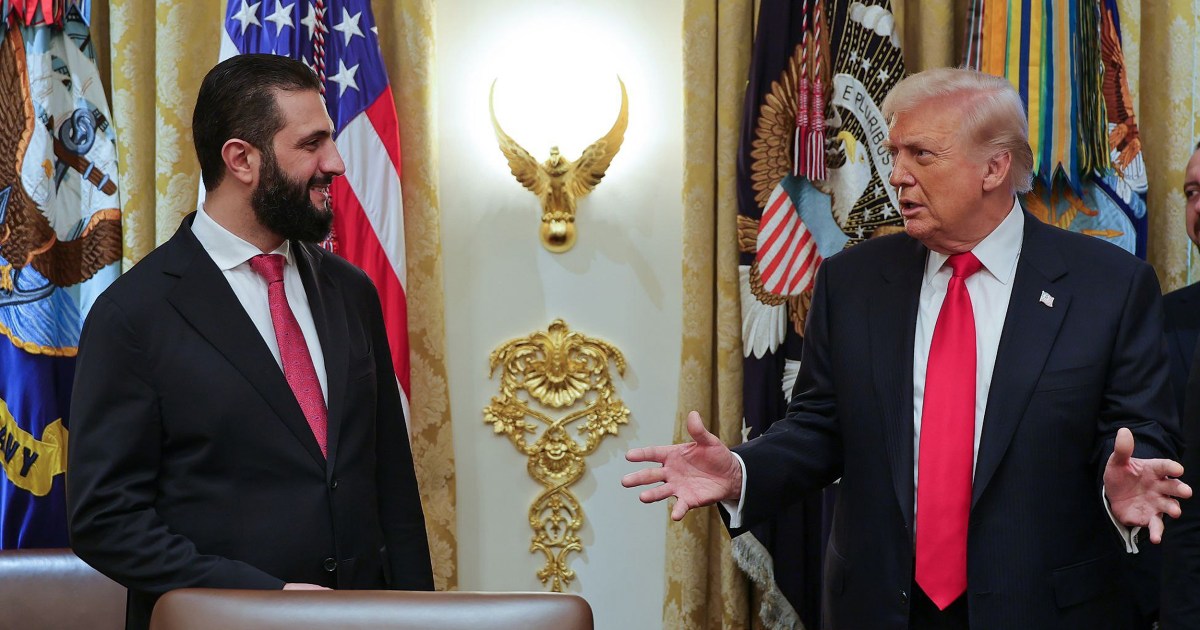
Asked on Thursday whether his administration is sending 1,100 Afghans to the D.R.C., President Trump said that he didn’t know. “I’d have to check,” the president said.
Betrayed by Empire After 20 Years
Arash Azizzada is the executive director of Afghans for a Better Tomorrow, a civil rights group for the Afghan diaspora in the United States. He said many Afghans worked with the U.S. occupation in order to challenge the Taliban’s extremist policies and were promised protection by the U.S. from reprisals after the U.S. military left in 2021.
“For 20 years the U.S. empire and U.S. government dutifully called Afghans ‘Afghan allies,’ and utilized the service of Afghans, who, by the way, didn’t have much of a choice and actually believed in their fight against the Taliban,” Azizzada said in an interview. “But now you are not an ally when you are no longer of service to the American government, and we see the betrayal and abandonment that comes after that.”
“All of those people are not only in limbo, but they are in crosshairs of ICE, so people are living in fear, and they are unsure of what might happen.”
Afghans and their families who were allowed into the U.S. under the Biden administration are now targets for Trump’s brutal immigration crackdown. Last month, an Afghan war veteran who fought alongside U.S. troops died in custody shortly after being arrested by Immigration and Customs Enforcement (ICE) agents in Texas. The Trump administration also nixed programs that protect refugees from Afghanistan and other nations from deportation. The administration is now urging some Afghans to “self-deport,” according to reports.
Azizzada said immigration enforcement against Afghans, and especially Afghan men, increased after an Afghan national fatally shot two National Guard members who were deployed to Washington, D.C. by Trump in November 2025. The shooter reportedly received paramilitary training from the CIA during the war, and a friend told The New York Times that he “suffered from mental health issues and was disturbed by the casualties his unit had caused.”
“There’s a lot of folks who have been left in limbo these past five years, and that highlights a failure of Congress between the evacuation of Kabul and today, and the Biden administration’s failure to prioritize this during their tenure,” Azizzada said. “All of those people are not only in limbo, but they are in crosshairs of ICE, so people are living in fear, and they are unsure of what might happen.”
VanDiver and AfghanEvac have worked to free Afghans who worked alongside the U.S. military from ICE custody, and now the veterans’ group is pushing Congress to save the 1,100 Afghans at Camp As Sayliyah. Multiple Democrats in Congress, including war veterans, released statements this week condemning the administration’s reported negotiations with the D.R.C. over the refugees, but the Republican majority remains wary of crossing Trump.
Rep. Gregory Meeks, the ranking Democrat on the Foreign Affairs Committee, slammed Republican colleagues this week for shifting their position on Afghan allies under Trump.
“It’s frustrating to me that people who were fighting Joe Biden, saying he’s moving too slow to get them here, we need to expedite this — I don’t hear them anymore,” Meeks told the news outlet NOTUS. “They don’t want to be on a different side than Trump, and anything that they do, they’ve got to check with the administration.”
VanDiver said Congress could immediately pass legislation to block any transfer of refugees to the D.R.C. and restart the program for resettling them in the U.S. as was originally promised.
“The pipeline is paused, not closed. The case files still exist. The interagency strategy can still be brought online,” VanDiver said. “The only thing standing between these families and the country they helped for 20 years is a policy decision made by Stephen Miller, Marco Rubio … and everybody else at the State Department.”
Back in Qatar, the stranded Afghans have a message for people in the U.S. and their representatives in Congress. Many are suffering from depression and other mental health issues, and missiles landed near the camp during the war between the U.S., Israel, and Iran. Without hardened shelter, children look up to the sky and wonder what will fall on them.
“When your soldiers asked us to stand beside them, we stood beside them. When they asked us to interpret, we interpreted. When they asked us to fight, we fought,” the collective statement said. “Many of our friends and family members died doing what America asked. We have been told, over and over, for 20 years, that America does not forget its friends.”
An urgent fundraising appeal: We fell short of our goal
Thank you for reading Truthout today. We have a brief message before you go —
Unfortunately, donations are down for Truthout at a time when media is under immense pressure. Trump is arresting journalists, Big Tech is censoring independent news, and economic conditions for media have been worsening for years.
Simultaneously, movement media is vital in the fight against Trump’s authoritarian reign. Our mandate to tell the truth, share strategies for resistance, and speak against fascism is ever more urgent in this deluge of political censorship. Yet, we are struggling to meet our publishing costs when our work is so urgently needed.
If you can support Truthout with a one-time or monthly donation, you will make a significant impact on our work. Please give today.