

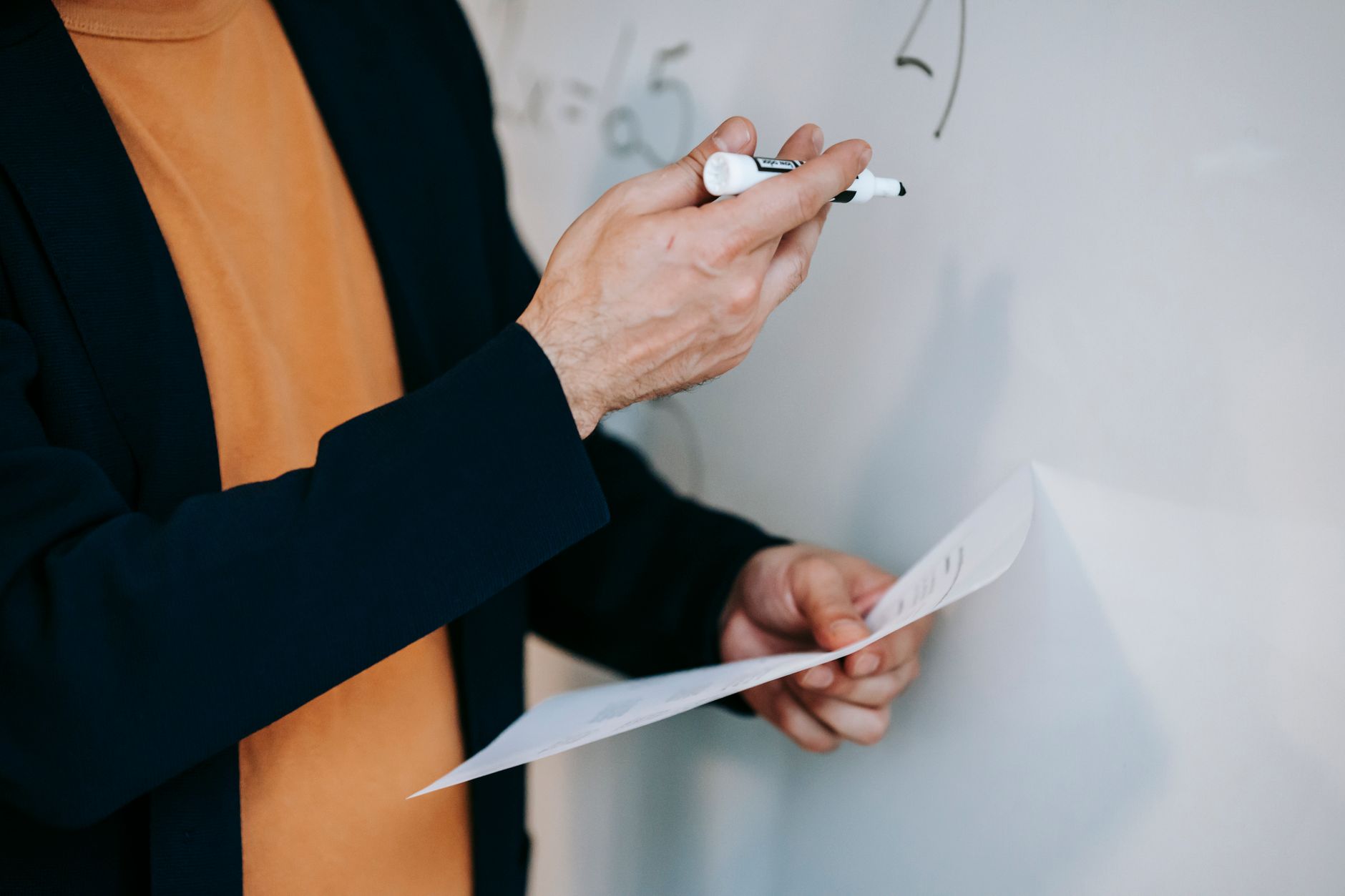
In a single classroom, under one teacher, two children sit a few feet apart. One is the son of a district collector. The other is the daughter of a daily-wage labourer who has never set foot in an office like the collector’s. They open the same book. They attempt the same problems. They are marked by the same test, in the same ink.
Outside that room, almost everything about their two lives is unequal. Inside it, for a few hours each day, they are exactly the same. This small, ordinary scene is what people have always meant by the phrase “education, the great equaliser”; and in India, after decades of being more hope than fact, it is finally starting to come true.
To see why that classroom matters so much, it helps to look at the one most children pass through first – the school. In any Indian city, “school” is not one thing but a ladder. There are convent schools and elite private academies, English-medium institutions and modest government schools, and the rung a child lands on is decided, overwhelmingly, by what her family can afford.
The school sorts children before they have learned a thing; the well-off into bright rooms with trained teachers, the poor into crowded ones and half-kept promises. Far from levelling the field, the school system too often hands each child straight back the very advantage, or disadvantage, she was born with.

This is the gap the idea of education as an equaliser was always meant to close. “Education must be a great equaliser in our society,” Rajiv Gandhi once said; “it must be the tool to level the differences that our various social systems have created over the past thousands of years.” But a tool only levels if it reaches everyone at the same quality – and that is exactly where a divided school system falls short, and where something else has quietly stepped in.
That something is the spread of rigorous, structured teaching beyond the privileged few; the world of coaching, best known for exam preparation, but whose deeper effect is social. In a good coaching classroom, the collector’s son and the labourer’s daughter are handed the same teacher, the same material, the same standard of explanation. No child gets a better answer for having a better surname. That plain sameness, the same chance, whatever a child’s religion, caste, class or hometown, is the equality the school system could not provide. It is an equal opportunity made concrete, in a single room, every single day.

The proof that this is changing the country lies in the sheer crowd now reaching for the top. Each year, more than 20 lakh students sit the NEET medical entrance and around 14 lakh take the JEE for engineering, by the National Testing Agency’s own data, and a great many of those names belong to homes with no history of higher education. In a country where about 65% of people are under the age of 35, by the government’s own count, that is a generation deciding, in its millions, that the doctor’s coat and the engineer’s seat are theirs to compete for too.

No institution illustrates this better than ALLEN, which began in the small city of Kota with a handful of students and grew into one of India’s largest names in education, teaching lakhs of children across dozens of cities and online; most of them, tellingly, from exactly the kind of ordinary towns and households this story is about.
“We provide equal opportunity for any student who dreams to become an engineer or a doctor and doesn’t have access to the facilities back home,” says its CEO, Nitin Kukreja. “That’s the social equality we bring to the table; everyone gets an opportunity, irrespective of where they’re from.”
The numbers bear the claim out – by the institute’s own count, roughly one in four students entering the IITs and the country’s top medical colleges have studied in its classrooms. And each one becomes more than an admission. Back home, the girl from the next street who made it is living proof, to a younger sibling, a neighbour, a whole locality, that a child from anywhere can reach the very top.

None of this means the equaliser has finished its work. Coaching costs money, good institutes are not yet everywhere, and the poorest child of all, the one who never enrols anywhere, still waits for quality to arrive. The same classroom that levels the collector’s son and the labourer’s daughter has not yet opened its doors to every child who deserves a place in it. The promise has begun to be kept. It has not been kept for everyone.
Yet the direction is no longer in question, and that is what the Powering India’s Potential partnership between ALLEN and the News18 Network sets out to examine. For the first time in its history, India is becoming a country where the accident of a child’s birth decides less and less about the size of her life, because the education that can lift her is reaching further than it ever has, and treating her, once she is in the room, exactly like everyone else. Education was always meant to be the great equaliser. In that ordinary classroom where the collector’s child and the labourer’s child learn side by side, it is, at long last, becoming one.

Watch the special episode:


