
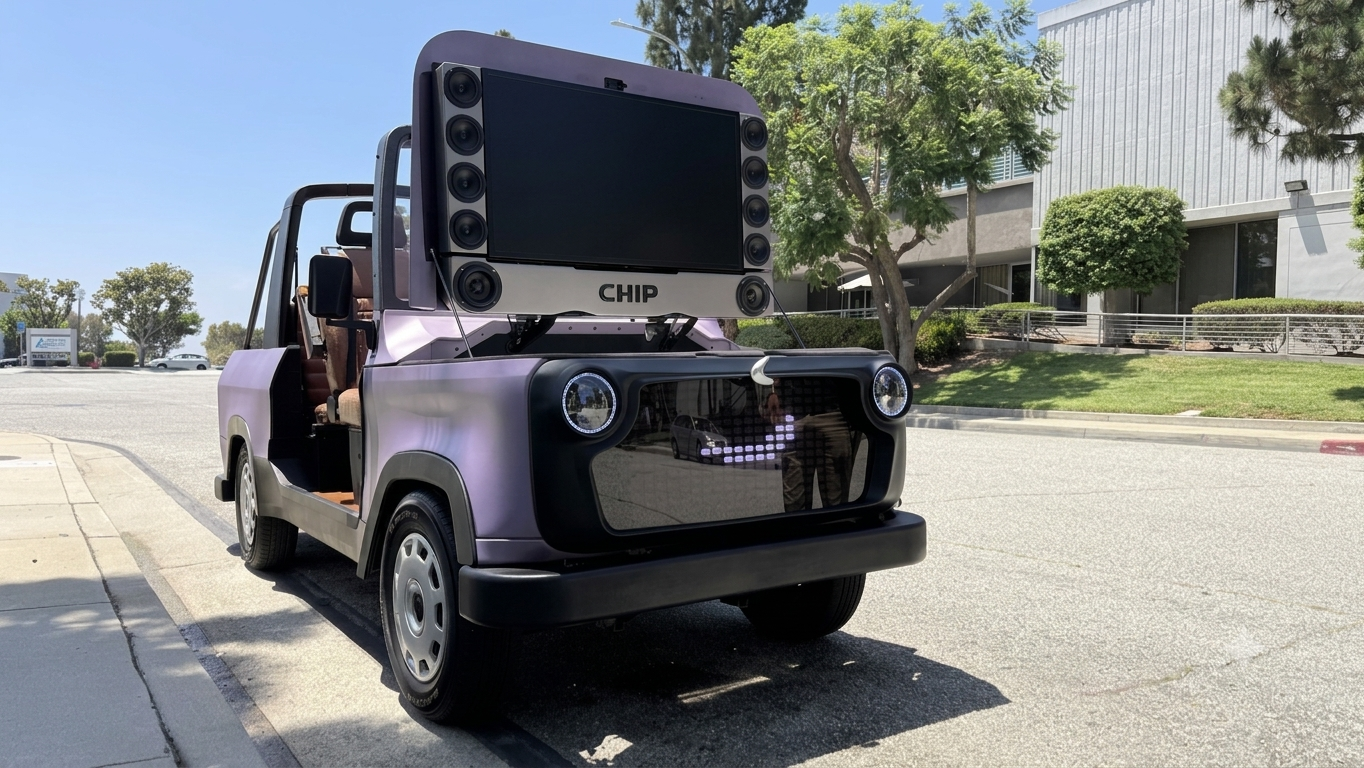
Last month, we went to the launch party for a different kind of vehicle, specifically an electric-powered, low-speed vehicle (LSV) from a new startup called Chip. Although we were initially skeptical of its cutesy face and cartoony proportions, we came away impressed enough with the concept that we invited Jameson Detwiler, the founder and CEO of Chip, to come on our podcast and discuss what makes his vehicle special.
As you’ll find in our discussion, the LSV space is already well-defined, and what Chip brings to the table isn’t anything earth-shattering when it comes to the basics. There are many 4- and 6-seat electric LSVs on the market priced between $12,000 and $20,000, built for slow-moving beachy lifestyles and gated communities and designed to serve as a second or third around-town vehicle.
But as you’ll hear from Jameson, what is unique about Chip’s approach is that it’s rooted in the future we keep hearing about; that the advent of all-electric, autonomous vehicles (full-size cars and trucks, not LSVs) will fundamentally alter transportation as we know it. Autonomy will change how we’ll park them (if we even park them at all) and challenge the traditional notion of car ownership.

Watch the full episode:

Remote Driving Before Autonomy
A good chunk of our chat revolved around ChipGo, a remote driving service that Jameson claims will roll out when the first consumer vehicles are delivered in Chip’s launch city of Miami. What does remote driving mean? Exactly what it sounds like: A remote human operator could be hailed to drive your Chip to a parking lot and/or back to you when you need it. Drones, delivery robots, and unmanned autonomous vehicles (UAVs) of all kinds currently operate this way, with varying levels of artificial intelligence (AI) assisting the piloting duties. Of course, the future of AVs seems to be predicated on AI taking over all driving duties, which is not only a hugely disruptive concept, but part of the reason for Chip’s cute face.

About that Cute Face
In December of 2025, the Society of Automotive Engineers (SAE) put forward J3134, a new standard that recommended automated driving indicator lamps, specifying that blue-green lights on vehicles would illuminate when they’re being operated in autonomous driving mode. The rationale is interesting: “… the initial justification was to make the road user comfortable when a driver is not present.”

Know what might make people feel even more comfortable when they see a six-passenger golf cart with no driver coming at them at 20 mph? According to Jameson, the crooked, pixelated smile on Chip’s face. Apparently, Chip’s ability to talk and emote (via the remote driver, for now) isn’t just for showing off at the local block party, but also during critical driving situations like crowded four-way stops, when hand gestures and facial expressions would normally be used to communicate with fellow drivers.

Intrigued? Listen to Jameson talk through the thinking in more detail on the ’pod.



