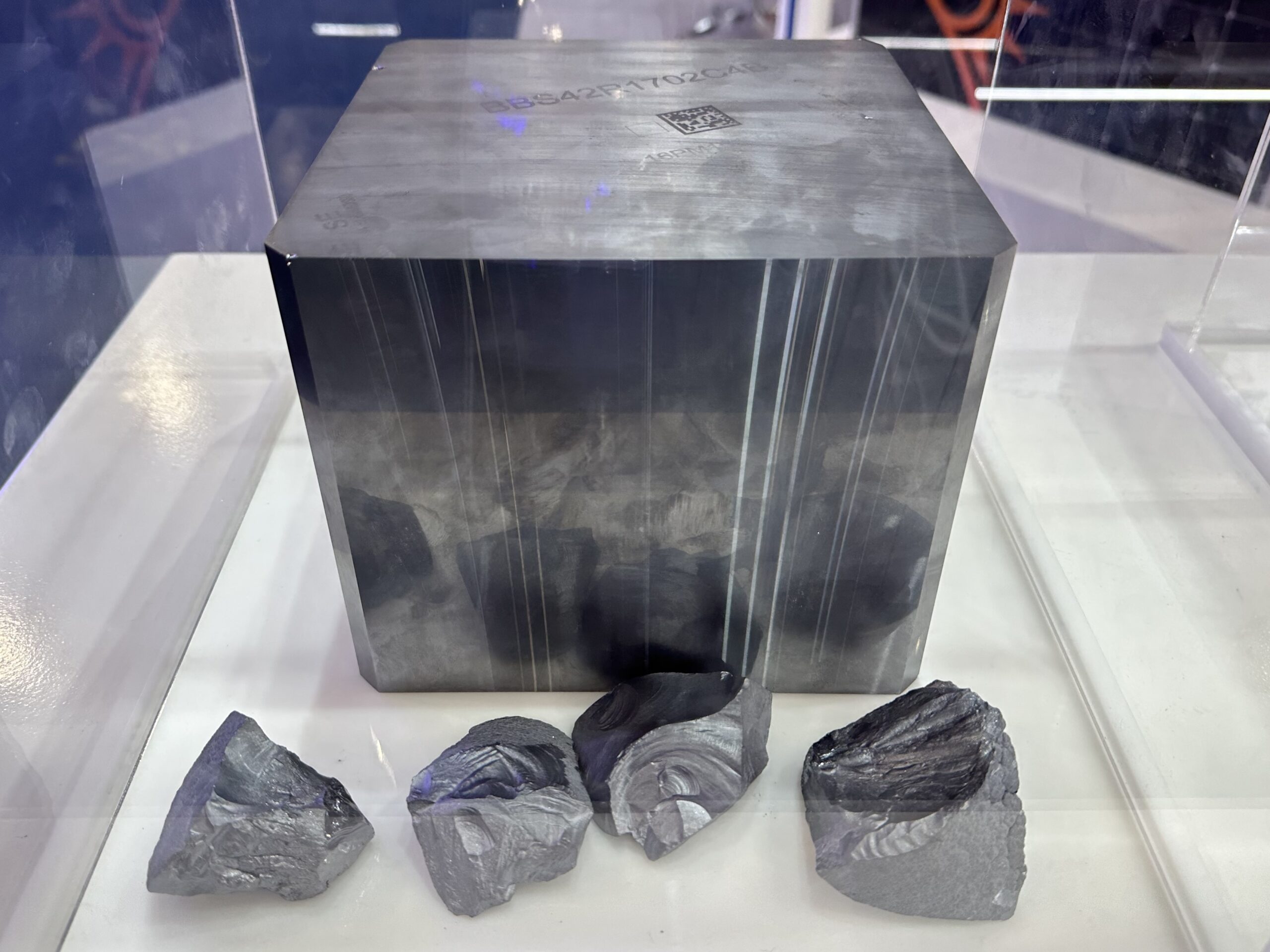
In a new weekly update for pv magazine, OPIS, a Dow Jones company, provides a quick look at the main price trends in the global PV industry.
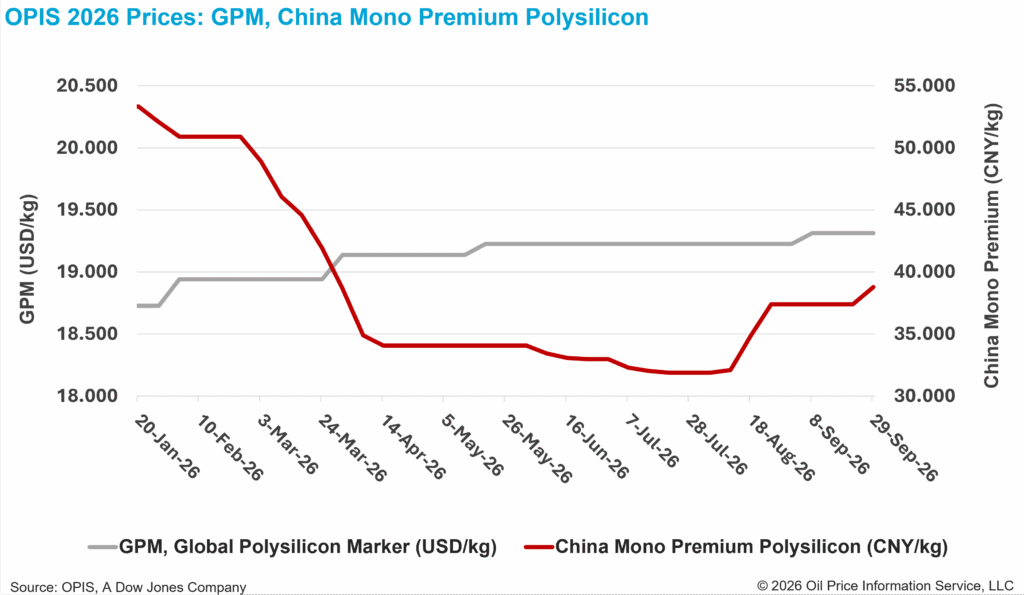
The Global Polysilicon Marker (GPM), the benchmark for polysilicon produced outside China, was unchanged from the previous week at $19.312/kg, or $0.041/W, according to the OPIS Global Solar Markets Report released on Sept. 29.
Market participants in the global polysilicon market continue to respond to policy, demand and financial pressures based on their individual circumstances. One trade participant said fulfilling monthly delivery obligations under existing long-term contracts could become increasingly difficult after November, with legal action being considered to enforce contractual commitments.
pv magazine Session @ NetZero Milan Expo Summit 2026

The dynamics shaping global PV supply chains – including solar modules, inverters, and battery energy storage systems – will be discussed during the “Decoding solar supply chains” session at the NetZero event in Milan on Oct. 21.
The session will examine the forces reshaping clean energy supply chains, from manufacturing and sourcing strategies to shifting trade and regulatory requirements. It will also explore what these developments mean for companies procuring solar and energy storage equipment in an increasingly complex global market.
Join us in Milan to hear from industry experts and take part in the discussion on the future of solar supply chains.
Global polysilicon demand is facing further pressure following a temporary final rule (TFR) issued by the U.S. Department of Commerce, according to a market participant. The rule restricts stockpiling of polysilicon and its derivatives ahead of the Section 232 import adjustments taking effect on Dec. 4, 2026.
The rule covers imports during the transition period from Sept. 22 to Dec. 3 and was introduced after trade data showed a sharp increase in polysilicon imports following the release of the Section 232 measures in early August.

Another source, however, said solar imports into the U.S. before Dec. 4 largely consisted of China-origin wafers, cells and modules entering through circumvention channels involving smaller traders and companies. The source said the TFR could significantly curb such imports and help normalize the market after Dec. 4, with limited direct impact on global polysilicon demand.

Meanwhile, some market participants have observed upward price momentum for U.S.-made polysilicon. According to sources, using U.S.-made polysilicon could create additional value for manufacturers with approved U.S. onshoring plans, as certain tariff relief or onshoring incentives under the Section 232 proclamation are explicitly linked to the use of U.S.-made polysilicon. Some counterparties have therefore been actively negotiating long-term agreements. Industry participants nevertheless expect the impact to emerge gradually rather than translate into firm demand immediately.
In China, the China Mono Premium, the OPIS assessment for mono-grade polysilicon used in n-type ingot production, increased 3.74% week on week to CNY 38.786 ($5.78)/kg, or CNY 0.081/W.
According to market feedback, the price increase this week was driven by the completion of some previously signed low-priced contracts, increasing the share of higher-priced new contracts in the market.
However, trade sources said downstream buyers have yet to broadly accept polysilicon offers around CNY 43/kg. Transactions at these levels have been limited and mainly involved special trading arrangements, such as polysilicon producers selling material to long-term customers and subsequently purchasing wafers from the same customers.
Outside these two-way procurement arrangements, wafer manufacturers are finding it increasingly difficult to accept higher polysilicon prices, one source said. In conventional one-way sales, n-type M10 wafers are trading at around CNY1/pc, below cash costs of roughly CNY1.10/pc, the source added.
On the supply side, industry-wide operating rates are expected to fall to around 35% from October, according to the Silicon Branch of the China Nonferrous Metals Industry Association (CNMIA). The association also said that some downstream players had started replenishing polysilicon inventories amid the expected supply contraction.

The 35% utilization level is broadly in line with the production-control arrangement reportedly discussed at meetings between the China Photovoltaic Industry Association (CPIA) and major manufacturers in early September, with unconfirmed reports indicating a cap of combined annual capacity at 1.028 million MT.

Market participants said, however, that the planned cuts would largely return operating rates to levels seen in the first half of 2026, while polysilicon inventories remain elevated at more than 500,000 MT. As a result, the supply reduction alone may be insufficient to trigger stronger downstream procurement.
Another market participant noted that polysilicon futures contracts for the two nearest delivery months were trading below CNY38/kg, allowing buyers with immediate requirements to source lower-priced material through the futures market and further limiting the pace of spot price increases.
Although polysilicon manufacturers are now insisting on full-cost pricing, a sustained move toward CNY 43/kg would require higher downstream product prices, one market participant said. With limited room for such increases, the source expected the gap between offers above CNY40/kg and transactions below CNY40/kg to persist.
OPIS, a Dow Jones company, provides energy prices, news, data, and analysis on gasoline, diesel, jet fuel, LPG/NGL, coal, metals, and chemicals, as well as renewable fuels and environmental commodities. It acquired pricing data assets from Singapore Solar Exchange in 2022 and now publishes the OPIS APAC Solar Weekly Report.
The views and opinions expressed in this article are the author’s own, and do not necessarily reflect those held by pv magazine.
This content is protected by copyright and may not be reused. If you want to cooperate with us and would like to reuse some of our content, please contact: [email protected].