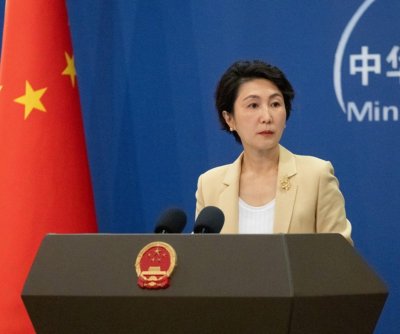
Chinese Foreign Ministry spokesperson Mao Ning speaks during a press conference at the Foreign Ministry in Beijing, China. Photo by JESSICA LEE/ EPA
July 7 (Asia Today) — China said countries should not overinterpret its test launch of a submarine-launched ballistic missile into the Pacific, after the firing drew criticism from Japan, Australia, New Zealand and Pacific island nations.
Chinese Foreign Ministry spokesperson Mao Ning said during a regular briefing Tuesday that the launch was part of regular military training by the Chinese military and was not aimed at any country or target.
Mao said China had notified Solomon Islands and other South Pacific and related countries in advance, adding that the launch complied with international law and international practice.
“China follows the path of peaceful development and a nuclear strategy of self-defense,” Mao said. She said China keeps its nuclear forces at the minimum level required for national security and that “relevant countries do not need to overinterpret this.”
China’s state-run Global Times also defended the launch in a commentary Tuesday, saying it demonstrated China’s determination and capability to firmly safeguard national sovereignty, security and territorial integrity.
The newspaper said China’s nuclear capability had reached another milestone and that the country would continue to strengthen its strategic deterrence system, including its nuclear triad.
A nuclear triad refers to a country’s ability to deliver nuclear weapons through three systems: intercontinental ballistic missiles, submarine-launched ballistic missiles and strategic bombers. Such a structure is intended to preserve the ability to retaliate after a nuclear first strike.

Chinese diplomatic sources in Beijing said China announced Monday that one of its nuclear-powered strategic submarines had successfully launched an SLBM carrying a dummy warhead into international waters in the Pacific.
China has not officially identified the missile. Experts believe it may have been the Julang-3, or JL-3, which was displayed during a military parade last year marking the 80th anniversary of victory in the War of Resistance Against Japanese Aggression.
The JL-3 is believed to have a range of up to 12,000 kilometers, or about 7,456 miles, placing much of the Pacific, including the U.S. mainland, within reach. Analysts say the missile strengthens China’s nuclear triad strategy.
Japanese Chief Cabinet Secretary Minoru Kihara said China’s military activities, combined with a lack of transparency, are a serious concern for Japan and the international community.
Australian Foreign Minister Penny Wong criticized the launch as destabilizing to the region. New Zealand Foreign Minister Winston Peters said it was not consistent with regional stability.
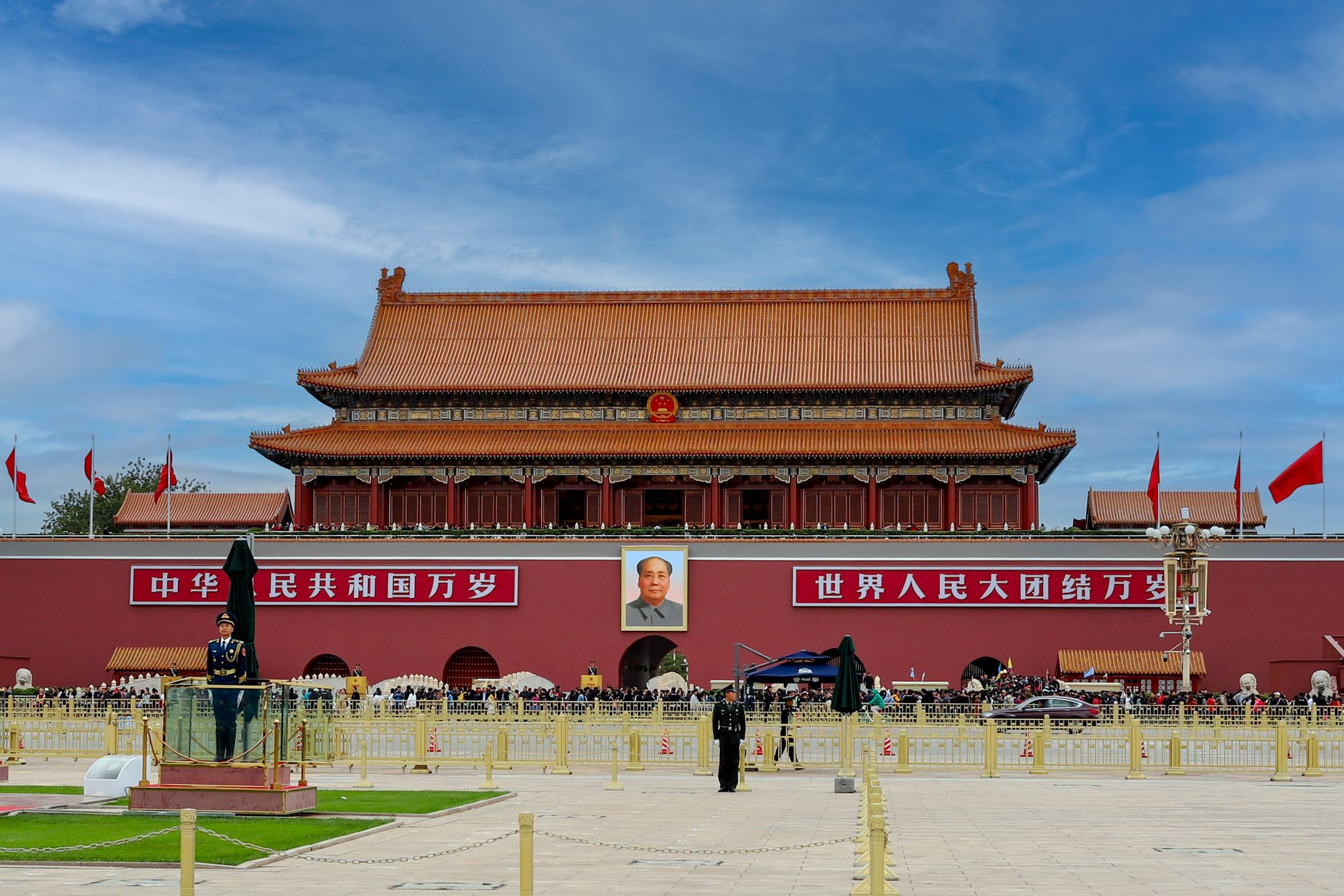
NATO Secretary-General Mark Rutte also expressed caution, saying, “We cannot be naive.”
Solomon Islands Prime Minister Matthew Wale, who chairs the Pacific Islands Forum, said he had delivered a strong protest to China’s ambassador in that capacity. Wale said the Solomon Islands government also submitted an official protest letter to China.
— Reported by Asia Today; translated by UPI
© Asia Today. Unauthorized reproduction or redistribution prohibited.
Original Korean report: https://www.asiatoday.co.kr/kn/view.php?key=20260707010002704